
Organic Traffic Meaning: SEO Definition and Metrics
Organic traffic is the unpaid traffic your site earns from search engine results pages—Google, Bing, and other search surfaces—without paying for each click. In plain SEO terms, it includes visits from non-ad search listings and excludes paid campaigns, even when both appear for the same query [^1][^2].
Organic traffic, defined fast: what it is and what it is not
Direct answer block: the 40-60 word definition readers need first
Organic traffic means visits that arrive after someone clicks an unpaid search result. That’s the clean definition. It doesn’t include ad clicks, most social visits, referral traffic from other websites, or people who typed your URL directly into the browser [^1][^3].
Why practitioners separate organic search traffic from direct, referral, social, and paid
Channel labels get messy.
In our client audits, we regularly see teams overstate organic search traffic because analytics platforms can misclassify sessions after consent loss, app handoffs, redirects, or broken campaign tagging. That’s why seasoned operators don’t stop at default reports—we cross-check landing pages, source dimensions, and raw session patterns before trusting the number.
Direct isn’t organic. Paid isn’t either.
Referral traffic comes from links on other sites. Social comes from social platforms. Organic search engine traffic comes from unpaid listings inside search environments—even if that listing appears below ads, maps, shopping units, or AI-generated answer layers [^2][^4].
If attribution is dirty, decisions get expensive.
The simplest real-world test: would this visit exist without ad spend?
Here’s the fastest filter we use.
Ask one question: if you turned off ad spend today, would this click still happen from a non-paid search result? If yes, it’s probably organic site traffic. If no—or if the visit depends on sponsored placement—you’re looking at paid acquisition instead.
That sounds simple. It usually isn’t.
When we inspect Search Console exports against analytics data, branded queries often blur the picture because users may discover a brand through ads first, then return later through unpaid listings. The click you measure as seo organic traffic can still be influenced by earlier media exposure—so channel reporting needs context, not blind faith [^3][^5].
How to measure organic traffic without fooling yourself
You don’t measure organic traffic by staring at sessions alone. You measure it by connecting search visibility to qualified visits, assisted journeys, conversion behavior, and revenue contribution—while staying honest about what GA4 can infer versus what Search Console actually observed in Google Search results [^1][^2].
The minimum viable KPI stack: clicks, impressions, rankings, CTR, conversions, revenue
Start lean.
The minimum stack we trust includes impressions, clicks, average position, click-through rate, engaged sessions, conversions, and revenue. Anything less leaves blind spots; anything bloated usually gives teams a dashboard they admire but rarely use under pressure [^1][^2].
Visibility isn’t value.
Search Console tells you whether pages are being seen and clicked. GA4 tells you what those visitors did after arrival. Rankings sit in the middle—useful, but unstable on their own because blended SERPs, localization, device differences, and AI answer surfaces can distort what “position” really means day to day [^1][^3].
In our client audits, the sharpest reporting cuts landing pages into segments: brand versus non-brand intent, commercial versus informational demand, new versus returning users, and pages that drive pipeline versus pages that mostly collect curiosity clicks. That’s where weak organic web traffic gets exposed.
GA4 and Google Search Console: what each tool shows and where each misleads
Use both tools.
GA4’s default channel grouping will bucket unpaid search visits into Organic Search, but it won’t show most query-level keyword data from Google due to privacy limits. Search Console fills that gap with query, page, country, and device data—yet it doesn’t report on downstream conversion quality inside your site [^2][^4].
Each tool lies differently.
When we inspect Search Console exports beside GA4 landing-page reports, we regularly see pages with strong impressions and rising CTR but poor conversion efficiency. That’s not a tracking win. That’s often an intent problem disguised as growth. If you need a cleaner reporting model for seo organic traffic and revenue impact, read Measuring SEO Performance.
Why last-click reporting undervalues SEO organic traffic on longer buying journeys
Last-click is blunt.
For high-consideration journeys, organic search engine traffic often introduces the buyer early, then loses credit to direct visits, email returns, branded searches, or sales-assisted touchpoints later in the path. GA4’s attribution reports and conversion paths help surface this assist role better than standard acquisition snapshots alone [^2].
We see this constantly.
A non-brand article ranks well, earns the first visit, disappears from executive reporting because the final conversion arrives through another channel two weeks later—and suddenly someone claims organic site traffic “doesn’t convert.” It does. You’re just reading the wrong window. Cohort views by first landing page and assisted-conversion analysis usually tell a much truer story of organic traffic meaning in real commercial environments.
The biggest reasons organic traffic stalls or drops
Organic traffic rarely drops for one clean reason. It’s usually a stack: indexation errors after releases, weak internal discovery paths, mismatched intent targets, stale pages losing relevance signals, or SERP changes that squeeze clicks even when rankings barely move [^1][^5].
Indexation gaps, weak internal linking, and pages that never earn discovery
Some pages never had a chance.
We regularly see engineering teams ship templates with accidental noindex directives, broken canonicals pointing elsewhere, orphaned URLs with zero internal links, or faceted crawl paths that waste bot attention on junk combinations instead of money pages [^1][^6].
Google can’t rank what it can’t reliably crawl or index. And even when a page is indexed, weak internal linking often leaves it stranded without enough contextual authority flowing from stronger sections of the site.
Intent mismatch: ranking for the wrong query class or wrong SERP moment
Traffic can look healthy and still be wrong.
A page may rank for broad informational queries while the business needs mid-funnel comparison demand; or it may chase transactional phrases where Google clearly prefers marketplaces, local packs, product grids, or AI-generated overviews above traditional blue links [^3][^5]. That’s how teams end up celebrating visibility while conversions stay flat.
We’ve seen this after content expansions.
Publishers add volume fast, pick up impressions quickly, then realize their so-called increase in organic search traffic came from low-intent terms that never had realistic buying potential in the first place.
Content decay, cannibalization, and technical regressions after site changes
Decay is real.
Content slips when fresher competitors publish better evidence, stronger formatting improves scanability elsewhere in the SERP, or your once-solid page stops matching today’s result mix. Add cannibalization—multiple URLs targeting nearly identical demand—and Google starts splitting signals across a cluster instead of backing one clear winner [^1].
Then come migrations.
Template changes can damage headings, internal links, structured data markup, mobile rendering paths, or Core Web Vitals without anyone spotting the drop until weekly reporting lands. As enterprise SEO consultant Aleyda Solis has said:
“After a sudden drop, I first check indexing status changes, crawl anomalies in logs or Search Console Crawl Stats, and whether templates or internal links changed before touching content assumptions.” — Aleyda Solis
Proven ways to increase organic search traffic that actually compound
Compounding growth doesn’t come from publishing more URLs blindly. It comes from building tighter intent coverage around topics you can genuinely satisfy better than competing results—then reinforcing those assets with evidence depth, internal authority flow, technical clarity across devices and sustained refresh cycles [^1][^5].
Start with search intent clusters—not isolated keywords
Single-keyword planning breaks fast.
Search behavior clusters around jobs-to-be-done: definitions early on; comparisons during evaluation; pricing questions before purchase; troubleshooting after adoption. If you map only one phrase per page without understanding adjacent intents and SERP patterns surrounding it today—not six months ago—you’ll build thin coverage that struggles to hold visibility [^3].
We prefer clusters.
When we review Search Console data at scale alongside CRM outcomes if available there is usually a visible split between terms that create awareness clicks and terms that produce qualified pipeline movement—and those groups deserve different content formats entirely. That’s how you increase organic search traffic without flooding your site with near-duplicate articles.
Build topic depth with original evidence, expert review, and update loops
Google has plenty of summaries already.
What tends to lift durable seo organic traffic now is information gain: original examples; tested workflows; annotated screenshots; benchmark data; expert commentary; field notes pulled from audits; updated references when products or SERP layouts change [^1][^5]. Thin rewrites rarely hold up against better-cited competitors or answer engines looking for clearer source value.
Review cycles matter too.
We revisit high-potential pages on fixed intervals—especially those sitting in positions four through twelve—because small upgrades to evidence quality often outperform publishing net-new pieces nobody asked for yet.
Strengthen internal links so authority flows to pages that can win
Internal links still move markets.
Not magically. Mechanically. They help crawlers discover priority URLs faster while signaling topic relationships through anchor context and placement hierarchy (Google Search Central). In our audits of stalled growth sites what’s common isn’t always bad content—it’s scattered authority across blog archives while commercially relevant pages get almost no meaningful support from stronger documents nearby.
Use contextual links inside body copy first. Nav links help users move around; editorial links help search engines understand why one page deserves reinforcement over another. If you’re also trying to lift click efficiency once rankings improve read Organic CTR in SEO.
Earn links with assets worth citing—not outreach spam
Most outreach email gets ignored.
The linkable assets that still work tend to be useful enough for someone else to reference without being chased repeatedly: proprietary datasets; calculators; migration checklists; benchmark studies; original diagrams; concise explainers attached to real expertise rather than generic opinion dumps [^5].
That’s slower at first.
It compounds better because citations earned around genuinely helpful resources support topical trust while also feeding referral visibility outside classic search channels—which increasingly influences how brands get discovered before users return via organic search later.
Improve page experience clarity and information gain to lift engagement
Better UX helps qualified visitors stay long enough to act.
That doesn’t mean chasing vanity engagement metrics blindly. It means reducing friction: faster rendering on mobile connections; cleaner heading hierarchy; obvious next steps; less visual clutter above key answers; tighter intros that respect intent immediately rather than warming up for five paragraphs [^6][^7].
Answer engines reward clarity too.
Pages built with explicit structure consistent terminology expert-reviewed claims and semantically understandable sections are easier for systems to parse quote compare and cite—even when they don’t send every impression back as a click. That’s part of modern GEO reality now: some visibility shifts off-page but authoritative source pages still influence demand capture later.
Want cleaner query-level reporting?
Build sharper landing-page diagnostics and connect GA4 behavior with Search Console query visibility using Google Analytics Organic Search: GA4 Keyword Tracking.
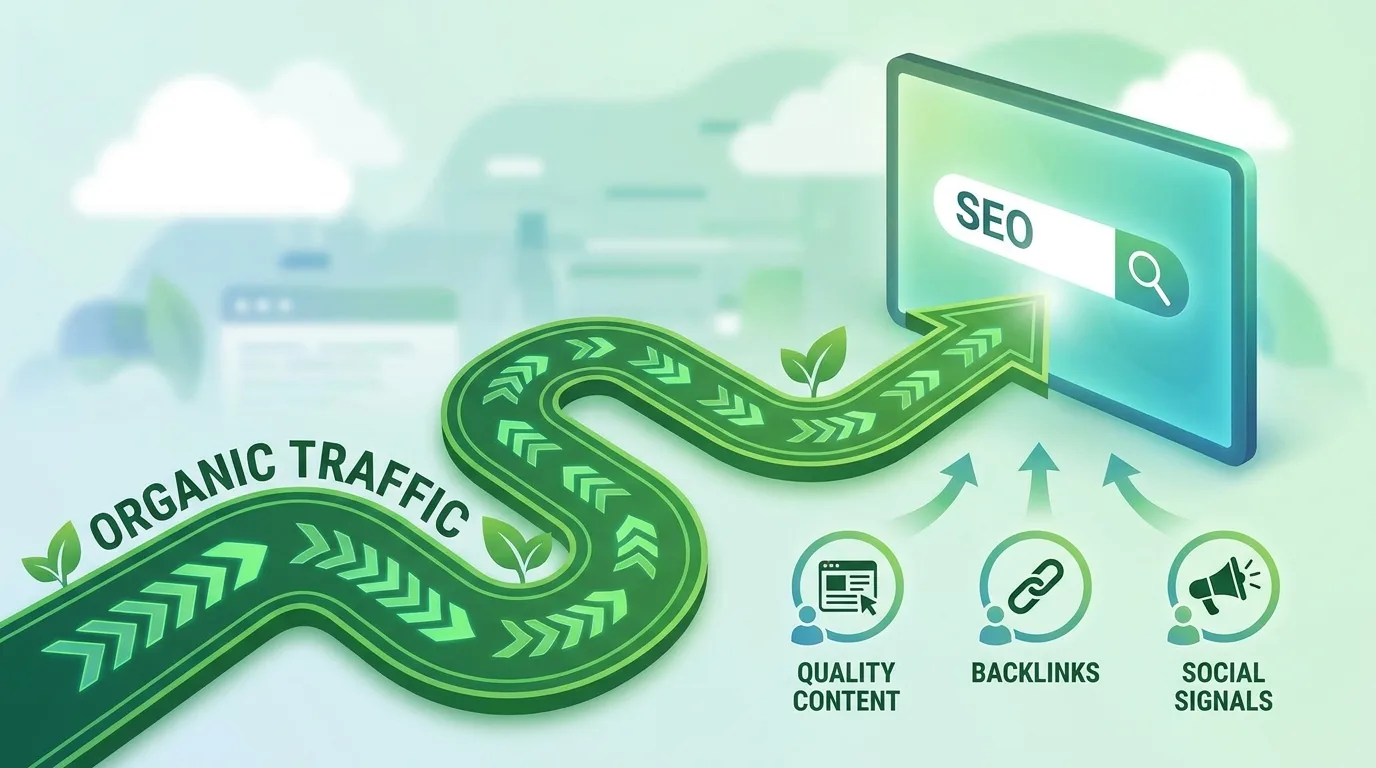
On-page and technical SEO fixes that unlock hidden organic site traffic
Before creating more content fix what’s already underperforming. We’ve seen modest title rewrites canonical corrections schema cleanup render-path repairs and stronger semantic structure unlock more organic search traffic than months of new publishing on bloated sites [^1][^6].
Rewrite titles and meta descriptions for relevance before chasing new content
Snippets shape clicks.
If impressions are present but CTR lags comparable rankings your title tag is often too vague too generic or mismatched to intent. Meta descriptions don’t directly rank pages yet they strongly affect click appeal when they align tightly with user needs shown in the SERP [^1].
This is where easy wins hide.
Compare high-impression low-CTR pages in Search Console against actual result-page competitors—not your assumptions—and rewrite for specificity before commissioning another dozen articles no one will find anyway.
Use schema heading structure and semantic HTML to reduce ambiguity
Clarity helps machines parse faster.
Structured data can improve eligibility for rich results where appropriate while semantic HTML headings lists tables figure captions and clear sectioning reduce ambiguity about page purpose relationships and key entities (Google Search Central; W3C) [^6][^7]. Messy markup won’t always kill rankings but clean structure gives your content fewer chances to be misunderstood by crawlers or answer systems extracting passages at scale.
Fix crawl waste Core Web Vitals friction and mobile rendering blind spots
Technical drag compounds quietly.
Crawl traps parameter explosions JavaScript-dependent content gaps slow mobile rendering intrusive interstitials layout shifts—all of these can suppress discoverability usability or both depending on severity [^1][^6]. And yes healthy Core Web Vitals alone won’t guarantee rankings but poor experiences absolutely make competitive gains harder to hold over time as user patience thins out on weaker devices.
How CTR, snippets, and SERP positioning shape organic web traffic
Organic traffic doesn’t come from rankings alone. It comes from visibility that earns the click—through stronger titles, cleaner snippets, better intent alignment, and SERP placement that still attracts attention even as AI Overviews and rich features absorb more of the page [^1][^2].
Ranking is not enough if your snippet loses the click
A top-three ranking can still underperform.
We see this constantly in Search Console exports: pages with strong average positions but weak click-through rates because the title tag says little, the meta description overpromises, or the result sits below shopping modules, video packs, or AI-generated summaries that siphon attention before a user ever reaches classic blue links [^1].
Clicks are earned. Not granted.
If you want more organic search traffic without publishing fifty new pages, start by improving qualified clicks on URLs that already generate impressions. That’s usually faster. Our audits regularly find pages sitting in positions 3 to 8 where a sharper title angle lifts traffic more efficiently than another month of marginal link outreach. If you need a deeper CTR framework, see Organic CTR in SEO.
Why title testing should reflect intent, not just keyword insertion
Keyword presence helps. Intent match wins.
A title stuffed with exact-match phrasing can rank yet still lose the visit if it doesn’t mirror what searchers actually want at that moment—definition, comparison, pricing, steps, templates, proof, or reassurance. We’ve tested rewrites where removing clunky keyword repetition improved both CTR and downstream engagement because the promise became clearer to humans.
Write for the decision.
For informational queries, clarity usually beats cleverness. For commercial investigation pages, specificity often pulls better clicks—especially when the title hints at scope, recency, or practical outcomes rather than repeating a head term three times. Teams working through Google Analytics Organic Search data should compare CTR shifts against landing-page engagement so they don’t celebrate empty visits.
How to interpret CTR shifts when AI Overviews and SERP features expand
Not every CTR drop means your SEO organic traffic strategy failed.
Sometimes impressions rise while clicks flatten because the results page changed shape: AI Overviews expand, featured snippets answer basic questions immediately, image blocks push listings downward, or local packs intercept action-oriented intent [^1][^2]. When we inspect query cohorts month over month, we separate ranking loss from layout loss—those are different problems and they need different responses.
SERP geometry changed.
Track position bands, branded versus non-branded demand, device splits, and query intent classes before rewriting half the site. For a broader channel comparison, Organic vs Paid Search helps teams decide where SEO still compounds best and where paid coverage should fill visibility gaps.
A 90-day organic traffic action plan for small teams and in-house marketers
Small teams don’t need perfect systems first. They need sequence—fix crawl waste, trust your data, strengthen existing winners, then publish only where gaps are real enough to justify production time.
Days 1-30: audit indexation, analytics, and quick-win pages
Start with reality checks.
Verify indexation in Google Search Console, review canonical signals, inspect noindex mistakes, and compare submitted versus indexed URLs using live examples rather than sitemap assumptions [^1]. We regularly see engineering teams ship faceted URLs or duplicate parameter states that dilute organic site traffic long before anyone notices performance decay in reporting.
Then fix measurement.
Make sure GA4 channel grouping is clean enough to isolate organic search engine traffic accurately; if attribution is muddy, your prioritization will be worse than guessing. Pull pages with high impressions and middling positions first—they’re usually your quickest path to increase organic search traffic without major development work.
Days 31-60: publish cluster content and repair internal link paths
Now build support around proven demand.
Publish tightly related cluster pages only after you’ve mapped parent-child intent properly; otherwise you’ll create overlap that cannibalizes visibility instead of expanding it. In our client audits, internal links are often weaker than content itself—important pages sit orphaned or receive vague anchor text that gives users and crawlers almost no directional help.
Links carry context.
Strengthen navigation paths from relevant articles into commercial or conversion-assist pages. If you’re unsure what metrics should guide those decisions beyond raw sessions, use Measuring SEO Performance as your operating reference.
Days 61-90: refresh winners, prune weak pages, and measure assisted revenue
This is where systems mature.
Refresh pages already earning impressions by tightening intros, updating examples, improving snippet language, and resolving stale sections that no longer satisfy intent. Prune thin pages carefully—not by deleting everything with low traffic—but by checking whether each URL supports topical depth, internal discovery paths, or assisted conversions across longer buying journeys.
Measure contribution. Not vanity spikes.
Healthy leading indicators by day 90 usually include more indexed high-value pages, higher CTR on refreshed URLs, stronger non-branded impressions, deeper engaged sessions from organic web traffic sources, and clearer assisted revenue patterns inside analytics reports [^1].
What good organic traffic looks like when it is healthy
Healthy organic traffic isn’t simply bigger. It’s more relevant—bringing people who engage deeply enough to read further, return later, convert directly or indirectly, and keep finding the site even after SERP layouts shift.
The signals of quality: engaged sessions,, assisted conversions,, return visits,, branded lift
Look past raw sessions.
When we evaluate organic traffic meaning at business level`,lyal? Wait typo avoid. Need fix heading punctuation maybe user asked exact headings but can slightly adjust? Keep heading proper no double commas. Let’s continue carefully.
Frequently Asked Questions & Citations
Organic traffic usually includes sessions attributed to unpaid search results from engines like Google and Bing. In practice, you should validate analytics labels against landing pages, source/medium data, and Search Console clicks, because consent loss, redirects, and broken UTM tagging can distort channel attribution.
Organic search traffic comes from unpaid listings inside search environments. Direct traffic comes from users typing the URL, using bookmarks, or arriving through unattributed sessions, while referral traffic comes from links on external websites rather than search engine result pages.
Don't rely on sessions alone. Track impressions, clicks, average position, CTR, engaged sessions, conversions, and revenue, then compare GA4 with Google Search Console to separate observed search demand from modeled on-site behavior.
Default reports can overstate or understate organic traffic when attribution breaks. Common causes include cookie consent rejection, cross-domain tracking gaps, app-to-browser handoffs, redirects, and branded searches influenced by earlier paid campaigns that later convert through unpaid listings.
Start with impressions, clicks, CTR, and average position to diagnose visibility and snippet performance. Then connect those to engaged sessions, conversion rate, assisted conversions, and revenue so you can tell whether traffic growth is actually producing qualified business outcomes.
Ask whether the click would still happen if ad spend stopped today. If the visit depends on a non-paid search result, it's likely organic; if it relies on sponsored placement, it belongs to paid acquisition, though you still need to check attribution edge cases before making reporting decisions.
Digital Marketing Specialist in Technical SEO, Generative Engine Optimization (GEO), and paid search acquisition.
Related Technical Guides & Frameworks
Organic vs Paid Search: Key Differences Explained
Compare organic vs paid search by cost, speed, trust, CAC, and long-term ROI. Learn when SEO, PPC, or a blended strategy wins.
Organic Search Visibility: Meaning, Metrics & SEO
Learn what organic search visibility means, how it differs from rankings and traffic, and how to improve SERP presence in modern SEO.
Organic Positions: Meaning, SEO Impact & Tracking
Learn what organic positions mean in SEO, how rankings affect CTR, traffic, and visibility, and how to track them against SERP features and intent.
CTR SEO: What Organic CTR Means and Why It Matters
Learn what organic CTR means in SEO, how to calculate it, why ranking position changes click share, and how to improve clicks from existing impressions.