
Organic Search Engine Optimization: How It Works
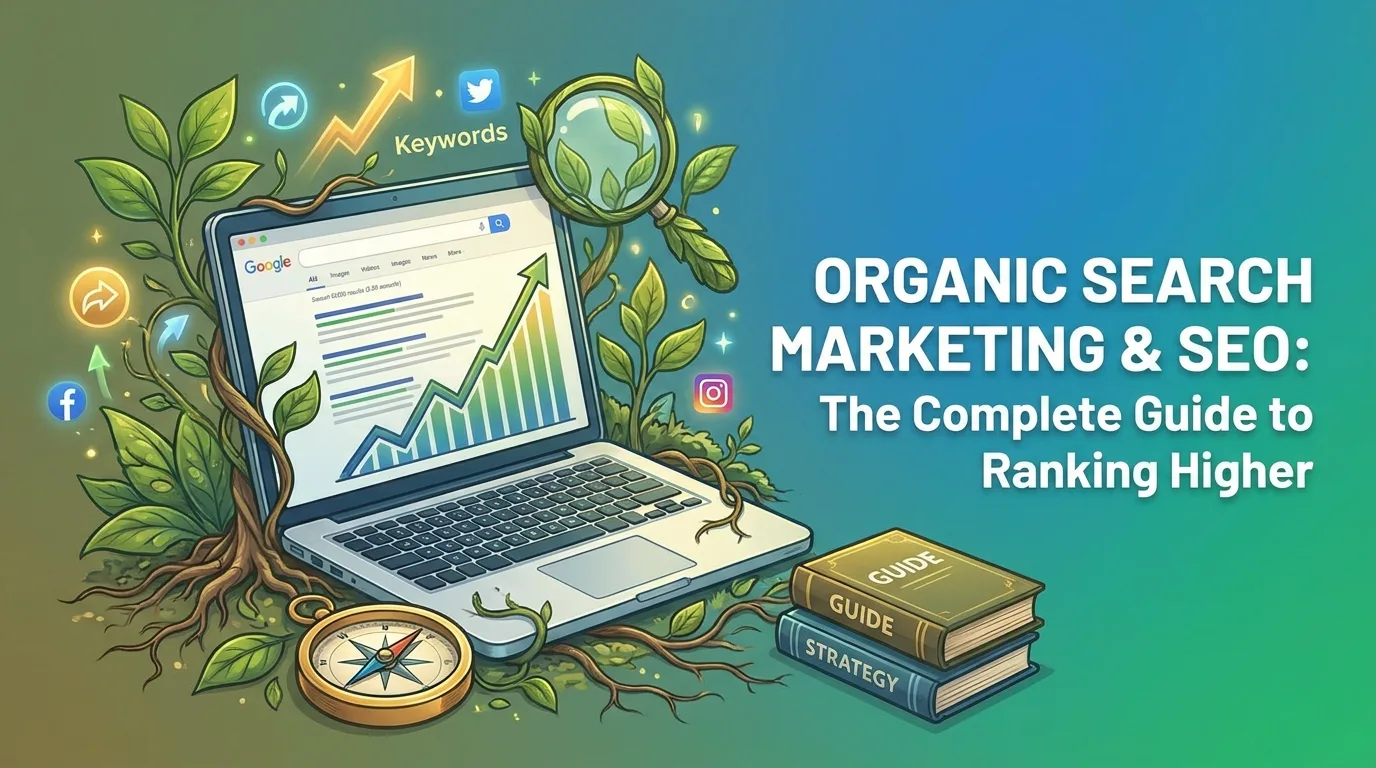
Organic search engine optimization is the discipline of increasing unpaid visibility across search engines and AI answer systems by improving crawlability, indexation, topical relevance, authority, and content structure. Modern organic search marketing SEO compounds through technically accessible pages, intent-matched content, and trusted signals that strengthen rankings, clicks, and answer-engine inclusion over time.12
What Organic Search Engine Optimization Means Today
Organic search engine optimization no longer refers only to blue-link rankings. Today, organic optimization spans classic search results, rich results, featured snippets, AI Overviews, and answer-engine retrieval layers. A modern organic search engine strategy must help systems crawl pages, interpret entities, map content to search intent, and assess whether a document is reliable enough to rank or be cited in generated answers.13
At the systems level, how organic search works follows four core stages: crawling, rendering, indexing, and ranking. Crawlers discover URLs through links, sitemaps, and feeds. Rendering systems process HTML, JavaScript, structured data, canonicals, and internal links. Indexing systems extract text, entities, media, and metadata into searchable representations. Ranking systems then evaluate relevance, quality, authority, freshness, usability, and query intent to order results for a given search.14
That process now extends into generative retrieval. AI-generated answers do not replace organic search SEO; they depend on it. Large-scale retrieval systems still prefer technically accessible, semantically clear, well-structured documents with strong source credibility. Pages that demonstrate topical completeness, explicit headings, schema support, and verifiable claims are more likely to influence both organic search rankings and synthesized answer surfaces.25
Organic search marketing differs from paid acquisition because its returns compound. Paid media stops when spend stops. Organic SEO techniques create durable assets: indexable pages, internal link equity, topical clusters, brand mentions, and historical engagement signals. Over time, these assets can improve organic SEO performance across entire query classes, not just single campaigns. For a foundational explanation of crawling and ranking mechanics, see Organic SEO Fundamentals. For measurement frameworks, review Organic Search Visibility.
How Search Engines Evaluate and Rank Organic Results
Crawling, rendering, indexing, and canonicalization
Organic search engine ranking begins with discovery. Search engines find URLs through internal links, XML sitemaps, redirects, canonical clusters, and external references. Once fetched, pages may be rendered to process JavaScript-generated content, lazy-loaded assets, and structured markup. If critical content is blocked, delayed, or absent from the rendered DOM, indexation quality declines.16
Canonicalization determines which URL should represent duplicate or near-duplicate content sets. Signals include rel=“canonical”, redirect behavior, internal linking consistency, hreflang alignment, and sitemap inclusion. Weak canonical hygiene can fragment link equity and suppress organic ranking by splitting relevance signals across multiple URLs.1
Relevance, quality, authority, freshness, and usability signals
After indexing, ranking models evaluate documents against the query. Relevance includes lexical matching, semantic similarity, entity alignment, and intent satisfaction. Quality includes originality, completeness, factual consistency, and information gain. Authority includes link-based signals, source reputation, authoritativeness, and brand-level trust cues. Freshness matters more for time-sensitive queries than evergreen informational searches. Usability includes mobile rendering, Core Web Vitals, accessibility, and intrusive interstitial avoidance.17
Document structure also affects seo organic results. Clear heading hierarchy, concise answer blocks, descriptive anchors, schema markup, and strong passage segmentation improve retrieval precision. Search systems increasingly rank passages and sections, not only full pages, especially for long-form informational content.35
“Create helpful, reliable, people-first content.” — Google Search Central, Search ranking systems and helpful content guidance1
How AI Overviews and answer engines synthesize content from trusted sources
AI Overviews and answer engines use layered retrieval, ranking, and synthesis pipelines. They identify candidate sources, score relevance and trust, extract salient passages, and generate summaries grounded in retrieved documents. Content most likely to surface is technically crawlable, topically explicit, citation-worthy, and supported by strong site-level and page-level authority signals.25
This makes organic search optimization management broader than rank tracking alone. Teams must monitor crawl logs, rendered output, structured data validity, passage-level answerability, and source-level trust. Strong performance in classic search can improve visibility in generative systems, but only when pages are also easy to parse and summarize.
Audit outcome: Audit how your site is crawled, indexed, and surfaced in search with our Organic SEO Fundamentals guide.
Organic Search vs Paid Search vs AI Visibility
Organic search engine marketing, paid search, and AI visibility operate on different economics and different discovery mechanics. Organic ranking is earned through relevance, authority, and technical accessibility. Sponsored placement is purchased through auction systems and bidding models. AI visibility is earned indirectly when content becomes a trusted retrieval source for generated answers.
Paid search is faster for demand capture, testing offers, and validating keyword conversion intent. Organic search optimization is slower initially but more defensible because high-performing pages can continue generating impressions and clicks without direct media spend. AI Overview visibility introduces a third layer: a page may influence the answer even when it does not receive the click, making authority and citation-worthiness strategic assets.2
For businesses deciding where to invest, the key distinction is durability. Paid campaigns scale with budget. Organic SEO strategies scale with content quality, internal architecture, and authority accumulation. AI answer inclusion scales with source trust, structure, and answer completeness. The strongest programs combine all three, but prioritize organic search marketing when long-term customer acquisition efficiency matters most. For broader program design, see Organic SEO Marketing.
| Dimension | Organic SEO | Paid Search | AI Overview Visibility |
|---|---|---|---|
| Primary mechanism | Ranking in unpaid results | Auction-based sponsored placement | Inclusion as a cited or synthesized source |
| Time to impact | Medium to long term | Immediate | Variable; often follows strong organic authority |
| Cost profile | Upfront content, technical, and authority investment | Ongoing media spend | Indirect investment through SEO, content, and trust |
| Click behavior | High for strong intent and trusted rankings | Strong for transactional terms | May reduce clicks while increasing brand exposure |
| Trust perception | Generally high | Lower than organic for some users | High if cited as an authoritative source |
| Durability | Compounding | Stops when spend stops | Dependent on source trust and retrieval eligibility |
| Scalability | Strong with content systems and architecture | Strong with budget | Strong when content is structurally retrievable |
| Measurement complexity | Moderate | Lower | High due to limited attribution and evolving surfaces |
Building an Organic Search Strategy That Maps to Business Outcomes
An effective organic search strategy starts with intent mapping, not keyword accumulation. Queries should be classified by informational, navigational, commercial, and transactional intent, then mapped to funnel stages, page types, and conversion paths. This is how organic search performance becomes a business system rather than a traffic vanity metric.
Informational queries build discovery and topical authority. Commercial queries compare options and influence pipeline. Transactional queries convert demand already in-market. Navigational queries capture branded intent and protect brand SERP real estate. A mature organic search engine optimization management framework assigns each query class to a measurable outcome: qualified sessions, assisted conversions, demo requests, revenue influence, or retention support.1
Topic clusters and entity coverage are central to organic seo optimization. Instead of isolated pages, build content architecture around core entities, adjacent subtopics, and supporting use cases. Pillar pages target broad concepts; cluster pages answer narrower intents; internal links consolidate relevance and guide crawlers through semantic relationships. This architecture improves organic search rankings by strengthening topical depth and reducing orphaned content.
Prioritization should balance quick wins and compounding assets. Quick wins include pages already ranking on page two, pages with high impressions but low CTR, and technical fixes blocking indexation. Strategic assets include category pages, comparison pages, glossary hubs, and evergreen educational resources. Compounding assets are pages that continuously attract links, citations, and long-tail visibility.
Measure outcomes beyond rank position. Track non-brand impressions, share of voice, crawl efficiency, indexed page quality, conversion rate by landing page, and assisted pipeline. Businesses that want to improve organic SEO should align reporting with revenue contribution, not only organic traffic growth. For marketplace-specific ranking context, see What Is Organic Ranking on Amazon? Key Factors.
Keyword Research for Organic Ranking and AI Retrieval
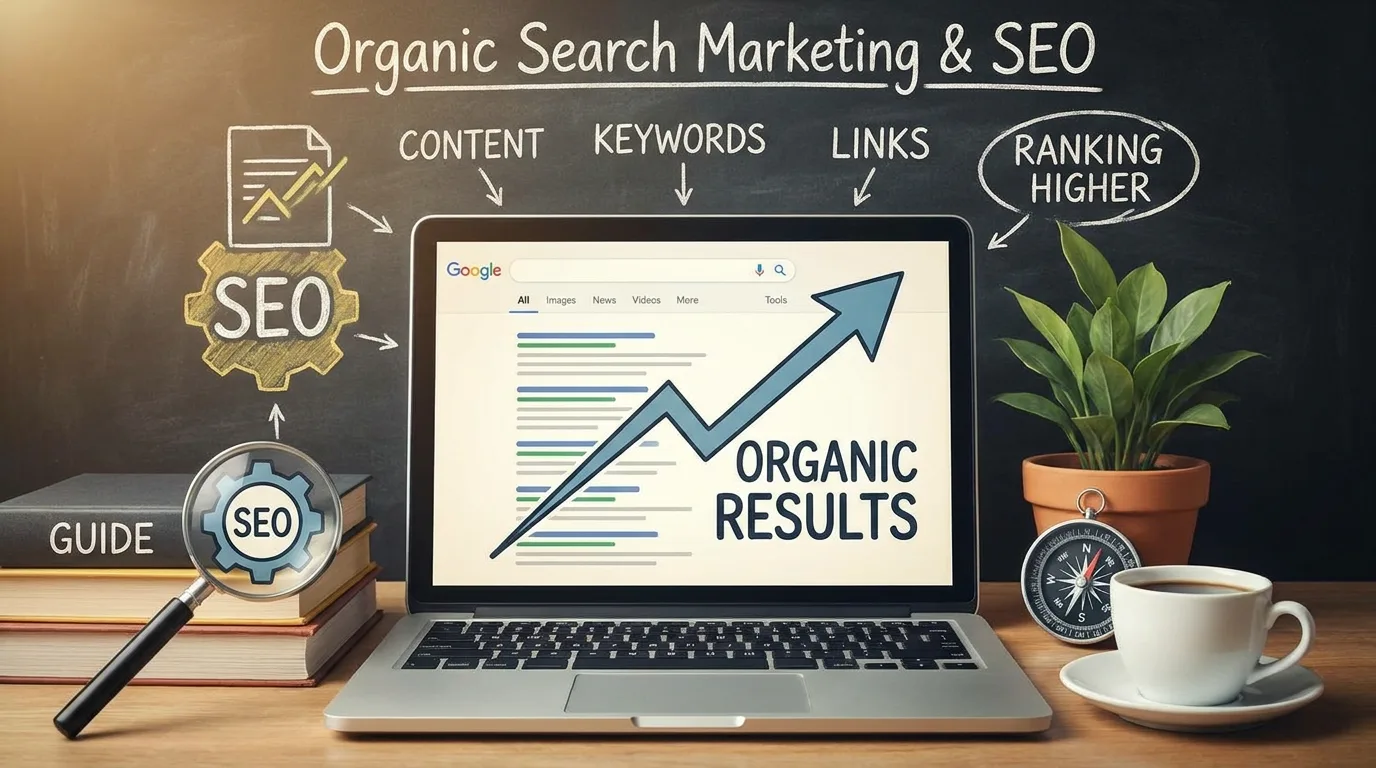
Modern keyword research for organic search seo must go beyond monthly volume. The objective is to identify high-value query patterns, underlying entities, modifier logic, and answer formats that search engines and AI systems can retrieve efficiently. Primary keywords define the main topic; supporting entities establish semantic completeness; modifiers reveal intent, urgency, geography, comparison mode, and funnel position.
A practical framework starts with query classes:
- Head terms: broad, competitive, high-volume concepts such as organic search engine optimization.
- Mid-tail terms: more specific phrases such as organic search engine optimization management.
- Long-tail terms: explicit needs such as how to improve organic search or how to boost my Google ranking.
- Entity-led queries: searches anchored to brands, products, people, or frameworks.
- Problem-solution queries: performance issues, diagnostics, and optimization requests.
- Comparison queries: alternatives, versus terms, and evaluation patterns.
SERP analysis is mandatory. Review ranking pages, People Also Ask patterns, related searches, rich results, video integration, and AI Overview presence. These features reveal whether the engine expects a definition, step-by-step workflow, comparison, template, or tool-driven answer. If a query consistently triggers generated summaries, your page should front-load concise answers, structured subheadings, and evidence-backed claims to improve retrieval suitability.25
Competitor gap analysis should compare not only keywords but entity coverage, internal link depth, schema implementation, and passage-level completeness. Pages that rank well for natural search optimization often answer adjacent questions users did not explicitly ask, reducing pogo-sticking and increasing satisfaction signals.
To improve organic search results, target topics where your site can provide superior information gain: clearer definitions, better examples, stronger data, fresher evidence, or more complete workflows. That is how to get organic search results that rank in classic SERPs and remain useful to answer engines synthesizing the web.
On-Page Organic SEO Techniques That Improve Relevance
Effective organic search engine optimization improves retrieval by aligning page structure, semantic signals, and answer formatting with both ranking systems and generative engines. The highest-impact on-page work strengthens topical relevance, passage extraction, crawl interpretation, and citation readiness without relying on repetitive exact-match keyword usage.
Title tags, headings, internal links, and semantic HTML
On-page organic SEO techniques should make relevance explicit at the document, section, and passage level. Title tags remain a primary topical classifier for organic search engine ranking and click qualification. Keep titles precise, front-load the core entity or task, and avoid redundant modifier stacking. A strong pattern is:
Primary topic | qualifier | brand
Headings should create a logical information hierarchy: one clear page-level thesis, followed by scannable subtopics that map to user tasks, entities, comparisons, and definitions. This improves both classic organic search optimization and passage-level retrieval used in AI answer synthesis.12
Use semantic HTML to reduce ambiguity:
<header>,<main>,<section>,<article>,<nav>- ordered and unordered lists for steps and attributes
- tables for comparisons
- definition-style lead sentences under each subheading
Internal links should reinforce topical clusters, not merely distribute PageRank. Use descriptive anchors that reflect destination intent and entity scope. For foundational context, connect related pages such as Organic SEO Fundamentals and Organic Search Visibility.
Search-intent matching, content depth, and passage-level clarity
Organic search marketing SEO performs best when each page satisfies a dominant intent: informational, comparative, navigational, or transactional. Mixed-intent pages often dilute organic ranking because they fail to provide a clear retrieval target.
To improve organic SEO and support GEO extraction:
- answer the primary query within the first 100 words of the relevant section
- define entities in one-sentence blocks
- separate concepts with descriptive subheadings
- use short paragraphs around high-value claims
- include comparison formatting where ambiguity is likely
Depth matters, but only when structured. Comprehensive coverage should include definitions, mechanisms, constraints, examples, and implementation details. This is central to Organic SEO Marketing, where long-term organic search rankings depend on sustained topical completeness rather than thin keyword targeting.
Schema markup, image optimization, and citation-ready formatting
Structured data helps search systems classify content type, relationships, and eligible search features, even when it is not a direct ranking factor.3 Use schema markup that accurately reflects visible content: Article, FAQPage only where appropriate, BreadcrumbList, ImageObject, and organization-level markup.
Image optimization supports organic internet search discoverability and page comprehension:
- descriptive filenames
- specific alt text
- compressed next-gen formats
- explicit width and height to reduce layout shift67
For citation-ready formatting, create extractable answer blocks, label comparisons clearly, cite original sources near claims, and avoid burying definitions inside long prose. That increases usability for humans and improves the odds of inclusion in AI-generated summaries.25
Need a practical framework for compounding organic growth? Explore Organic SEO Marketing: Long-Term Success Metrics to build a system for sustainable visibility, stronger organic ranking, and measurable SEO performance gains.
Technical SEO Foundations for Strong Organic Search Performance
Site architecture, XML sitemaps, robots directives, and crawl efficiency
Technical SEO determines whether high-quality pages can be discovered, rendered, canonicalized, and indexed efficiently. Strong organic search engine optimization management starts with architecture: important pages should be reachable within a shallow click depth, ideally through consistent navigational pathways and contextual internal links.1
A resilient architecture for organic search performance includes:
- hierarchical URL structure aligned to topic clusters
- HTML navigation that exposes key category and subcategory pages
- XML sitemaps segmented by content type and freshness
- robots directives that block low-value crawl traps without hiding essential assets
- normalized parameter handling to reduce duplicate crawl paths
XML sitemaps do not guarantee indexing, but they improve discovery and change signaling for canonical URLs.1 Robots.txt should control crawler access conservatively; blocking JavaScript, CSS, or image assets can impair rendering and content understanding. For large sites, crawl efficiency improves when faceted navigation, session parameters, and duplicate archives are constrained.
Core Web Vitals, mobile rendering, JavaScript SEO, and accessibility
Performance directly affects rendering quality, usability, and search eligibility signals. Core Web Vitals remain practical engineering targets for organic optimization: Largest Contentful Paint around 2.5 seconds or less, Interaction to Next Paint at 200 milliseconds or less, and Cumulative Layout Shift at 0.1 or less are widely cited thresholds in Google guidance.7
JavaScript-heavy experiences require server-side rendering, prerendering, or hydration patterns that expose meaningful HTML early. If critical content, links, or metadata depend on delayed client-side execution, organic search engine crawlers may process them less reliably or more slowly.1
Accessibility also strengthens machine interpretation. Proper landmarks, form labels, heading order, alt text, and keyboard support improve robustness across browsers, assistive technologies, and search parsers, aligning with W3C standards.6
“There’s no ranking bonus for inaccessible sites, but inaccessible sites can make it harder for users to succeed, and many accessibility best practices overlap with what helps search engines understand content.” — Google Search Central / Martin Splitt, standards-aligned rendering and accessibility guidance, 2025
Canonical tags, duplicate control, hreflang, and index management
Canonicalization is essential for organic search rankings when similar or duplicated content exists across parameters, categories, regional variants, or syndication endpoints. Use self-referencing canonicals on indexable pages and point duplicates to the preferred version only when the content is materially equivalent.1
Technical controls for index management should include:
| Area | Best Practice | SEO Impact |
|---|---|---|
| Canonical tags | Declare preferred URL consistently in HTML | Consolidates signals and reduces duplicate confusion |
| Duplicate control | Merge overlapping pages or noindex low-value variants | Improves crawl efficiency and topical clarity |
| Hreflang | Map language/region alternates accurately | Prevents misrouting in international organic search |
| Pagination/facets | Limit indexable combinations | Reduces crawl waste and thin-page inflation |
| Status codes | Return correct 200, 301, 404, 410 responses | Improves index hygiene and crawl interpretation |
Index management should be deliberate, not expansive. Many sites underperform in organic search engine marketing because they allow low-value archives, filtered URLs, and near-duplicate pages to compete with core assets. Clean indexation strengthens relevance concentration and improves natural search optimization at scale.
Content Systems That Win Organic Search Rankings Over Time
Pillar pages, supporting articles, and topical authority loops
Sustained organic ranking comes from systems, not isolated posts. A strong content model uses pillar pages for broad entities and supporting articles for subtopics, comparisons, workflows, and edge cases. This creates a topical authority loop: supporting pages rank for narrower queries, pass contextual relevance through internal links, and reinforce the pillar’s eligibility for broader organic search rankings.
A mature cluster should include:
- a definitive pillar page
- supporting how-to, glossary, comparison, and troubleshooting articles
- internal links with intent-specific anchors
- periodic consolidation when overlap emerges
This structure improves retrieval coverage for both traditional search and AI systems that assemble answers from multiple passages.25 For marketplace-specific context, a specialized example is What Is Organic Ranking on Amazon? Key Factors.
E-E-A-T signals, original evidence, and source-backed claims
High-performing organic search seo content demonstrates experience, expertise, authoritativeness, and trust through visible evidence rather than self-assertion. Practical signals include expert bylines, methodology notes, versioning, firsthand screenshots, proprietary data, and citations to primary sources.1
Original evidence is especially valuable for improving organic search results because it creates differentiators that cannot be replicated through generic AI-assisted drafting. Strong trust signals include:
- firsthand testing
- benchmark data
- annotated examples
- source citations near claims
- clear editorial ownership and update history
These elements increase citation likelihood in answer engines and support stronger brand trust across the search journey.
Refresh cycles, pruning, consolidation, and content decay prevention
Organic SEO strategies must account for content decay. Rankings often erode when statistics age, SERP intent shifts, or multiple pages compete for the same query set. A disciplined refresh system should classify URLs by traffic trend, conversion value, link equity, and freshness risk.
Recommended maintenance actions:
- refresh high-value pages every 6 to 12 months
- consolidate overlapping articles
- prune thin or obsolete URLs
- revalidate citations and screenshots
- improve internal links from newly published assets
A content system that continuously refines coverage, evidence, and internal relationships will outperform sporadic publishing in organic search and search engine optimization. It also compounds Organic Search Visibility by keeping the site citation-ready, current, and topically coherent.
Authority, Links, and Brand Signals in Organic Search Marketing
Why backlinks still matter and where they are overrated
Backlinks remain a core discovery, trust, and authority signal in organic search marketing, especially when they are editorial, topically relevant, and difficult to manufacture at scale.4 They help search engines evaluate which pages deserve stronger organic seo ranking when multiple candidates satisfy intent.
However, links are overrated when relevance, technical quality, and content usefulness are weak. A heavily linked page that fails intent matching or offers little original value will not sustain strong seo organic results. Authority amplifies quality; it does not replace it.
Digital PR, citations, mentions, and co-occurrence signals
Modern authority building extends beyond raw link counts. Valuable signals include:
- editorial backlinks from trusted publications
- expert citations in industry roundups
- unlinked brand mentions in relevant contexts
- entity co-occurrence with recognized topics, tools, and experts
Digital PR works best when tied to assets worth referencing: original research, calculators, frameworks, public datasets, and expert commentary. These assets support natural search engine optimization because they earn mentions from real editorial workflows rather than manipulative placement schemes.
Brand search demand, reputation, and trust reinforcement
Brand strength influences how users interact with search results and how often publishers reference a company. Strong branded demand, positive reputation signals, and consistent expertise can reinforce organic ranking indirectly through higher engagement, more citations, and stronger trust perception.
For organic search engine marketing, the safest authority model is:
- publish original, source-backed content
- distribute it through PR, partnerships, and expert networks
- earn citations and links from relevant publications
- reinforce trust with consistent brand signals across the web
Avoid private blog networks, paid link manipulation, and scaled low-quality guest posting. Those tactics create fragile gains and increase long-term risk. Durable authority in organic search optimization is earned through reputation, evidence, and reference-worthy assets.
Measurement, Reporting, and Organic SEO Optimization Management
Effective organic search engine optimization management ties visibility to revenue, not vanity rankings. Measure non-branded organic search performance by page type, intent, and conversion contribution using Search Console, analytics, log files, and controlled experimentation. The objective is prioritization: identify which technical, content, and authority changes improve qualified traffic, conversion efficiency, and durable organic ranking.
A mature organic optimization framework tracks five KPI layers:
- Visibility: impressions, share of search visibility, SERP feature ownership, and index coverage
- Ranking: average position, ranking distribution, keyword clusters, and organic search rankings by intent class
- Traffic: clicks, click-through rate, landing-page sessions, and new-user acquisition
- Quality: engagement depth, return visits, assisted conversions, and task completion signals
- Business impact: leads, pipeline, revenue, margin contribution, and customer acquisition efficiency
For organic search marketing SEO, segmentation matters more than aggregate totals. Separate:
- Branded vs non-branded queries to isolate true demand capture from brand familiarity
- Page groups such as product, category, editorial, comparison, documentation, and local pages
- Intent classes including informational, commercial investigation, transactional, and navigational
- Device and geography because CTR curves and SERP layouts vary materially by context 1
Search Console should be used for query-page CTR diagnostics, indexing anomalies, and impression-to-click opportunity analysis. Web analytics should connect landing pages to assisted revenue, lead quality, and downstream conversion value. Log-file analysis validates whether important URLs are actually crawled at the expected cadence and whether crawl budget is being wasted on parameterized or low-value URLs 2. Experimentation loops should test title rewrites, internal link changes, template upgrades, and content restructuring before broad rollout.
Core KPI model for organic search optimization
| KPI Layer | Primary Metrics | Diagnostic Use | Business Relevance |
|---|---|---|---|
| Visibility | Impressions, indexed URLs, SERP features | Detect discoverability gaps | Indicates search demand access |
| Rankings | Position, rank distribution, volatility | Measure organic seo ranking movement | Early signal, not final outcome |
| Clicks | Clicks, CTR, landing sessions | Evaluate snippet and intent fit | Traffic acquisition efficiency |
| Engagement | Scroll depth, engaged sessions, return rate | Validate content usefulness | Quality of acquired audience |
| Conversions | Leads, sales, assisted revenue, LTV | Connect organic search seo to profit | Executive decision metric |
Use reporting to drive action. If rankings rise but CTR falls, the issue is snippet competitiveness or SERP feature displacement. If clicks rise but conversions fall, intent alignment is weak. If pages are published but impressions remain flat, the problem is usually indexing, internal linking, or insufficient topical authority. This management discipline complements the frameworks in Organic SEO Fundamentals and Organic SEO Marketing.
Common Reasons Organic Rankings Stall or Decline
Organic search rankings usually stall because one of four systems breaks: crawlability, relevance, authority, or interpretation. Diagnosis should begin with the simplest failure mode and move outward.
High-frequency causes of organic ranking stagnation
- Indexing gaps: canonical conflicts, noindex leakage, weak internal links, orphan pages, JavaScript rendering failures, or migration errors prevent inclusion in the serving index 1
- Weak intent alignment: pages target a keyword but fail to satisfy dominant SERP intent, causing low CTR, short engagement, and suppressed organic ranking over time
- Thin topical coverage: isolated pages lack supporting cluster content, entity breadth, and comparative depth needed for competitive natural search optimization
- Over-optimization: repetitive anchor text, forced keyword insertion, and template duplication reduce readability and can trigger quality reassessment
- Cannibalization: multiple URLs compete for the same query class, splitting links, relevance, and click signals
- Internal link dilution: too many low-priority links or poor contextual anchors weaken page importance distribution
- Algorithm shifts and SERP feature loss: AI Overviews, featured snippets, local packs, video units, and shopping modules can reduce classic blue-link CTR even when rankings hold 3
- Competitive displacement: stronger publishers update faster, expand topic coverage, or earn more authoritative citations
Troubleshooting should follow a structured pathway:
- verify indexation, canonicals, redirects, and rendering
- compare target pages against current SERP intent and feature composition
- review internal linking, anchor specificity, and supporting cluster depth
- audit CTR decline by query and device
- check whether traffic loss is ranking-driven, demand-driven, or SERP-layout-driven
- review post-migration and post-update templates for hidden regressions
For improving organic search results after a decline, avoid immediate large-scale rewrites. First isolate whether the issue is technical, competitive, or measurement-based. This is especially important after migrations, CMS redesigns, or content consolidation projects. For marketplace contexts, the logic parallels What Is Organic Ranking on Amazon? Key Factors: relevance, discoverability, and conversion strength interact rather than operate independently.
Advanced GEO Tactics for Google AI Overviews and Answer Engines
Generative Engine Optimization extends organic search engine optimization by making pages extractable, attributable, and synthesis-ready. Pages that win in AI-mediated search present concise answer blocks, explicit entities, source-backed claims, retrieval-friendly passages, and machine-readable structure that supports citation, comparison, and disambiguation.
Classic organic search optimization remains necessary, but GEO changes formatting priorities. Answer engines do not only rank documents; they extract passages, reconcile entities, and synthesize responses from multiple sources. That means each page should contain:
- a 40-60 word executive answer block near the top
- clear entity naming for products, concepts, standards, organizations, and authors
- definition-first subheads that map to likely query reformulations
- structured comparisons for alternatives, tradeoffs, and selection criteria
- source-supported claims with inline citation anchors 14
- modular passages that remain intelligible when extracted out of page context
GEO execution model for answer engines
| GEO Element | Implementation | Why It Helps |
|---|---|---|
| Executive answer block | 40-60 word direct answer under heading | Improves passage extraction and summarization |
| Entity disambiguation | Explicitly name entities, attributes, and relationships | Reduces ambiguity in retrieval and synthesis |
| Citation anchors | Inline references tied to claims | Increases trust and source eligibility |
| Comparison tables | Standardized attributes and differences | Supports answer assembly and factual compression |
| Schema markup | Article, FAQ, Organization, Product where valid | Improves machine interpretation |
| Passage design | Short, self-contained explanatory blocks | Enhances chunk retrieval quality |
Use retrieval-friendly language: one paragraph should answer one question. Define terms before expanding them. Keep comparative attributes stable across sections. Where possible, cite standards, patents, research papers, and official platform documentation rather than secondary summaries. This strengthens source-candidate status for AI summarization systems and aligns with evidence-based organic seo strategies.
For sustained organic search and search engine optimization performance, combine GEO formatting with the measurement discipline outlined in Organic Search Visibility. The objective is not only ranking in seo organic results, but becoming a citable source for synthesis layers above them.
Implementation Roadmap and Next Steps for Sustainable Organic Growth
Sustainable organic search engine marketing should be executed in phases so that technical stability, content expansion, and authority development reinforce each other rather than compete for resources.
30-day, 90-day, and 12-month roadmap
| Time Horizon | Priority Actions | Primary Owners | Expected Outcome |
|---|---|---|---|
| First 30 days | Fix indexation, canonicals, redirects, metadata, internal links, and reporting baselines | SEO, engineering, analytics | Recover crawl efficiency and measurement integrity |
| First 90 days | Build topic clusters, improve templates, rewrite weak titles, add comparisons, strengthen schema, test CTR improvements | SEO, content, design | Improve organic search rankings and click efficiency |
| 12 months | Earn citations, publish original research, expand entity authority, refine GEO formatting, and scale experimentation | SEO, PR, content, leadership | Durable authority and compounding organic ranking growth |
Operationally, assign clear ownership:
- SEO: keyword mapping, internal link architecture, technical requirements, experimentation backlog
- Content: topical depth, factual sourcing, answer-first formatting, update cadence
- Engineering: rendering, crawl controls, structured data, performance, migration safety
- Design: information hierarchy, comparison modules, snippet-friendly templates
- Analytics: KPI definitions, attribution models, dashboard governance, anomaly detection
Executive takeaways for how to improve organic search:
- fix technical blockers before scaling content
- measure non-branded performance separately from brand demand
- prioritize pages by revenue contribution and strategic intent class
- format high-value pages for both ranking and answer extraction
- build authority through original evidence, citations, and reference-worthy assets
Build a measurable organic growth plan with supporting resources: review Organic Search Visibility: Meaning, Metrics & SEO for KPI design and Organic SEO Marketing: Long-Term Success Metrics for business-impact reporting. Use both to operationalize a defensible organic search strategy with clear accountability.
References & Authoritative Sources
Footnotes
-
Google Search Central. Search ranking systems, crawling, indexing, canonicalization, and helpful content guidance, 2025. ↩ ↩2 ↩3 ↩4 ↩5 ↩6 ↩7 ↩8 ↩9 ↩10 ↩11 ↩12 ↩13 ↩14 ↩15 ↩16 ↩17
-
Google Search Central. AI features and search guidance; generative search documentation, 2025. ↩ ↩2 ↩3 ↩4 ↩5 ↩6 ↩7 ↩8 ↩9
-
Google Search Central. Search appearance and rich result documentation, 2025. ↩ ↩2 ↩3 ↩4
-
Brin, S., & Page, L. The Anatomy of a Large-Scale Hypertextual Web Search Engine. Stanford/Google foundational retrieval model. ↩ ↩2 ↩3
-
arXiv literature on retrieval-augmented generation and passage retrieval systems, 2023–2025. ↩ ↩2 ↩3 ↩4 ↩5 ↩6
-
W3C Web Performance and rendering-related standards documentation, 2025. ↩ ↩2 ↩3
-
Google Search Central and Chromium documentation on page experience and Core Web Vitals, 2025. ↩ ↩2 ↩3
Frequently Asked Questions & Citations
Organic search engine optimization is the practice of increasing unpaid visibility across traditional search results and AI-driven answer surfaces. It focuses on crawlability, rendering, indexation, semantic clarity, intent alignment, structured data, and authority signals so search systems can trust and rank a page.
Search engines typically move through discovery, crawling, rendering, indexing, canonicalization, and ranking. They fetch URLs from links and sitemaps, render JavaScript when needed, extract entities and content into the index, consolidate duplicate signals with canonicals, and then score pages for relevance, quality, freshness, usability, and intent match.
Technical SEO determines whether pages can be discovered, rendered, and indexed correctly at scale. Problems such as blocked resources, weak internal linking, redirect chains, duplicate URLs, slow performance, or incorrect canonical tags can reduce crawl efficiency and suppress rankings even when content quality is strong.
AI retrieval systems still depend on accessible, well-structured source documents. Pages with explicit headings, strong topical coverage, schema markup, verifiable claims, and clear entity relationships are more likely to be retrieved, cited, or influence generated answers because they reduce ambiguity during machine interpretation.
Track indexed pages, crawl status, impressions, clicks, click-through rate, average position, non-brand traffic, query coverage, and conversions from organic sessions. On the technical side, monitor Core Web Vitals, crawl errors, canonical conflicts, renderability, and internal link depth to identify bottlenecks that affect visibility and ranking growth.
Results often appear in stages rather than all at once: indexing improvements can surface within days or weeks, while meaningful ranking and traffic gains commonly take several months. Competitive query classes, site authority, crawl frequency, content quality, and internal link architecture all influence the timeline.
Digital Marketing Specialist in Technical SEO, Generative Engine Optimization (GEO), and paid search acquisition.
Related Technical Guides & Frameworks
Organic SEO Fundamentals: How Organic Search Works
Learn organic SEO fundamentals, how organic search works, and how to improve rankings with crawlability, relevance, authority, and UX.
Natural Search Definition: What It Means for SEO
Learn the natural search definition, how unpaid rankings work, and how SEO improves crawlability, relevance, authority, and organic visibility.
Organic SEO Marketing: Long-Term Success Metrics
Learn what defines long-term organic SEO marketing success: qualified traffic growth, durable rankings, stronger engagement, clean indexation, and conversions.
B2B SEO Services: The Complete Strategy for Enterprise Pipeline and Organic Growth
Scale enterprise pipeline with specialized B2B SEO services. Learn how high-intent bottom-of-funnel keywords and site architecture drive qualified demo requests.