
What Is Organic Ranking on Amazon? Key Factors
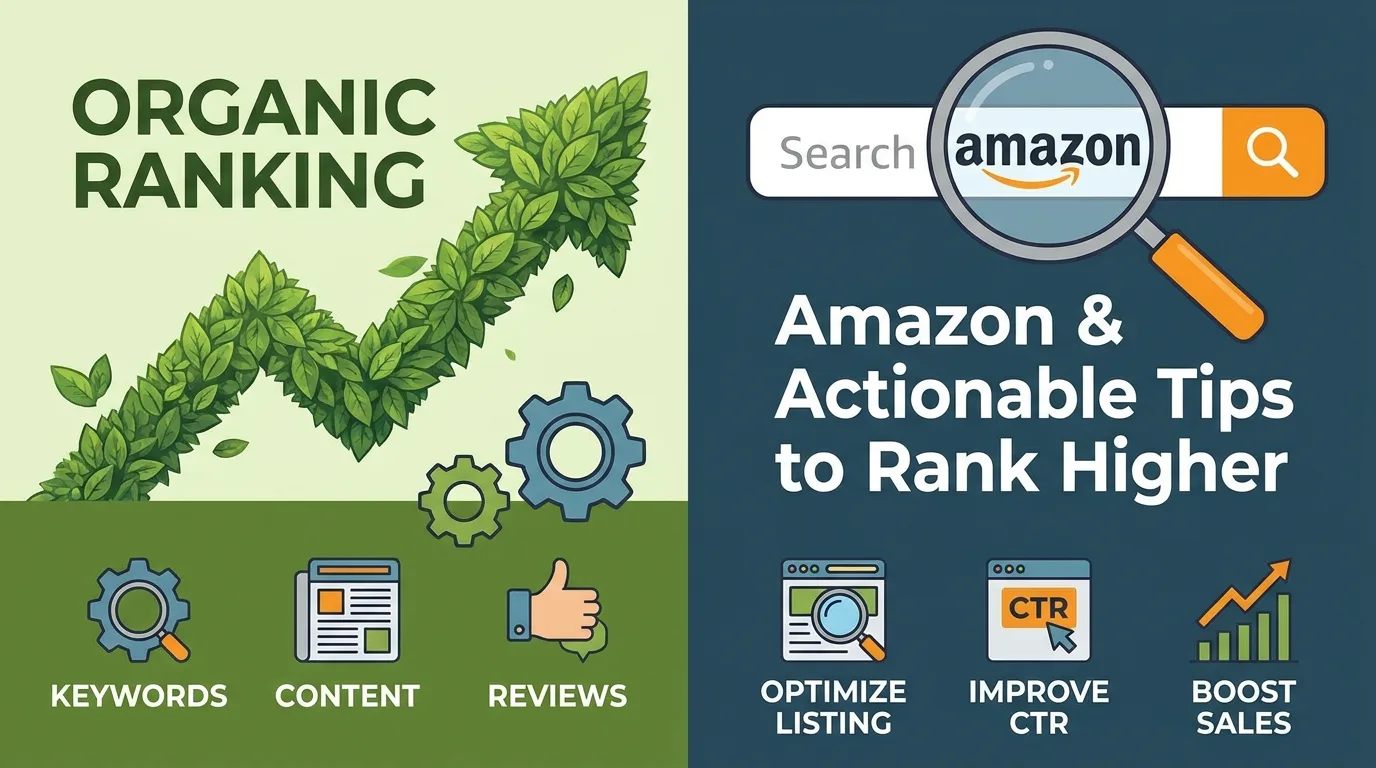
Organic ranking on Amazon is a product’s unpaid position in Amazon search results, determined by how strongly an ASIN matches a shopper query and how likely it is to generate a successful purchase. Core inputs include keyword relevance, click-through rate, conversion rate, reviews, pricing, fulfillment quality, inventory stability, and sales velocity.12
Executive Answer: What Organic Ranking on Amazon Actually Means
Why This Definition Matters for GEO and AI Overviews
For GEO, the definition must be extractable, precise, and entity-complete. “Organic ranking on Amazon” refers specifically to unpaid search placement for an ASIN within Amazon’s product search environment, not sponsored ads, display inventory, or external retail media placements. The ranking system evaluates both lexical relevance and commercial performance: query match, indexed terms, product attributes, shopper engagement, conversion efficiency, and post-purchase satisfaction signals.13
This distinction matters because AI answer engines favor compact definitions that connect the primary entity set: Amazon search, ASIN, query relevance, CTR, conversion rate, reviews, price competitiveness, fulfillment reliability, and sales momentum. In practice, ranking is not merely about inserting keywords into a title. Amazon’s search stack is designed to maximize purchase probability and customer experience, which makes organic visibility inseparable from listing quality and offer performance.24
That is also why Amazon organic ranking should be analyzed alongside adjacent search concepts such as Organic Search Visibility, Organic Positions, and engagement metrics like CTR SEO and Organic CTR in SEO.
How Amazon Organic Ranking Works in Search Results
Organic Results vs Sponsored Results vs Retail Media Placements
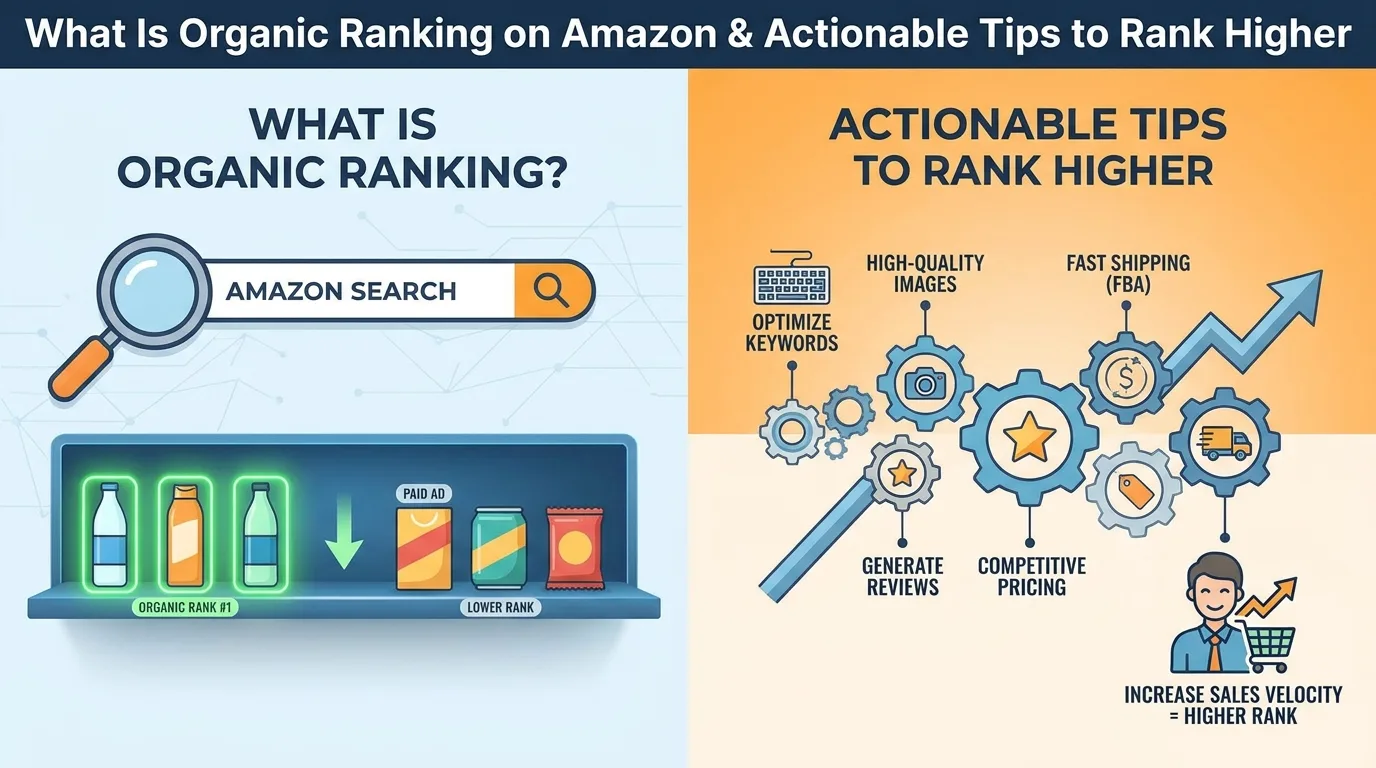
Amazon search operates as a commerce retrieval and ranking engine. A shopper enters a query, Amazon retrieves eligible ASINs from its index, applies relevance filters, and then ranks products based on predicted likelihood of satisfying the shopper while driving a completed transaction.12 Organic results are unpaid placements. Sponsored results are paid placements influenced by bidding and ad relevance. Retail media placements extend beyond standard sponsored listings into broader paid visibility surfaces across Amazon’s ecosystem.
Core Ranking Entities: Query, ASIN, Relevance, Conversion, and Sales Momentum
The core entities are query, ASIN, listing content, offer data, and behavioral feedback. Amazon first determines whether an ASIN is indexed for the query through title terms, bullet points, backend search terms, product attributes, and category mapping. Then it evaluates whether the ASIN deserves a high position based on expected click probability, expected conversion probability, and historical sales performance for similar search contexts.25
This is why visibility, rank, and revenue are related but not identical. A product may be indexed yet buried on page five. Another may briefly rank due to aggressive promotions but fail to sustain position if conversion deteriorates. Organic ranking is therefore a probabilistic output of both discoverability and commercial efficiency.
Why Amazon Optimizes for Purchase Probability, Not Just Text Match
Unlike informational search engines, Amazon optimizes for transaction completion and customer satisfaction. Text match matters, but only as an entry condition. A perfectly keyword-aligned listing with weak images, poor ratings, uncompetitive pricing, slow delivery, or stock instability will often underperform a slightly less text-optimized listing with stronger purchase signals.14
| Visibility Type | Placement Logic | Primary Inputs | Cost Model | Main Performance Benchmark | Strategic Use |
|---|---|---|---|---|---|
| Organic ranking | Unpaid search placement based on relevance and performance | Query match, CTR, conversion rate, reviews, price, fulfillment, sales velocity | No direct media cost | Organic position, organic sales share, conversion efficiency | Durable visibility and lower marginal acquisition cost |
| Sponsored ads | Paid placement in search and product pages | Bid, ad relevance, conversion history, retail readiness | CPC | ACoS, ROAS, paid CTR, paid CVR | Fast demand capture, keyword testing, launch support |
| External traffic impact | Indirect influence through off-Amazon demand and downstream sales signals | Traffic quality, branded search lift, conversion contribution | Variable by channel | Session quality, attributed sales, rank lift persistence | Demand generation and sales momentum reinforcement |
CTA: Audit your current category terms, highest-volume queries, and organic placements before changing copy or bids. Diagnose whether the problem is indexing, weak CTR, low conversion, or unstable sales momentum before making listing edits.
The Main Signals That Influence Organic Ranking on Amazon
Relevance Signals: Title, Bullets, Backend Terms, and Category Fit
Relevance signals determine whether Amazon can confidently map an ASIN to a query. The title carries high semantic weight because it combines product type, brand, variant, and major attributes. Bullet points reinforce feature-level matching. Backend search terms expand retrievability for synonyms, alternate use cases, and variant phrasing. Category placement and attribute completeness help Amazon interpret product identity, compatibility, and browse-node fit.15
A listing with strong keyword coverage but weak entity structure often under-indexes for valuable long-tail terms. Conversely, a listing with accurate product type, size, material, compatibility, and intended-use attributes can gain broader retrieval coverage even without excessive keyword repetition. Relevance is therefore not just about term inclusion; it is about structured product representation.
Conversion Signals: CTR, Images, Price, Reviews, and Offer Strength
Once retrieved, the ASIN must win the click and the purchase. CTR is influenced by the main image, title clarity, review count, star rating, price framing, coupon visibility, and brand recognition. Conversion rate depends on the full detail-page experience: image stack quality, A+ content, review sentiment, Q&A coverage, feature clarity, and competitive pricing.24
Products that rank but fail to convert usually lose position over time because Amazon interprets weak sales efficiency as poor shopper fit. This mirrors broader search behavior, where engagement quality affects visibility durability, a concept also relevant to Organic CTR in SEO.
“Amazon organic ranking is best understood as a relevance-plus-revenue model. If a listing is discoverable but does not convert at the category benchmark, it rarely holds top placement for competitive terms.” — Senior Amazon Marketplace Strategist
Performance Signals: Sales Velocity, Inventory Health, Fulfillment, and Return Risk
Performance signals determine whether ranking gains persist. Sales velocity remains one of the strongest reinforcement mechanisms because it validates product-market fit at the query level. Inventory consistency matters because stockouts interrupt momentum and can collapse rank recovery. Fulfillment quality, including Prime eligibility, delivery speed, and order reliability, improves purchase confidence and reduces friction.13
Return risk and negative customer experience can also suppress ranking durability. High defect rates, poor review trends, or misleading product expectations degrade trust signals. Amazon’s system is designed to protect shopper satisfaction, so operational reliability is not separate from SEO; it is part of ranking infrastructure.
Indexing vs Ranking: Why Being Searchable Is Not the Same as Ranking High
How Amazon Indexes Product Listings for Search Terms
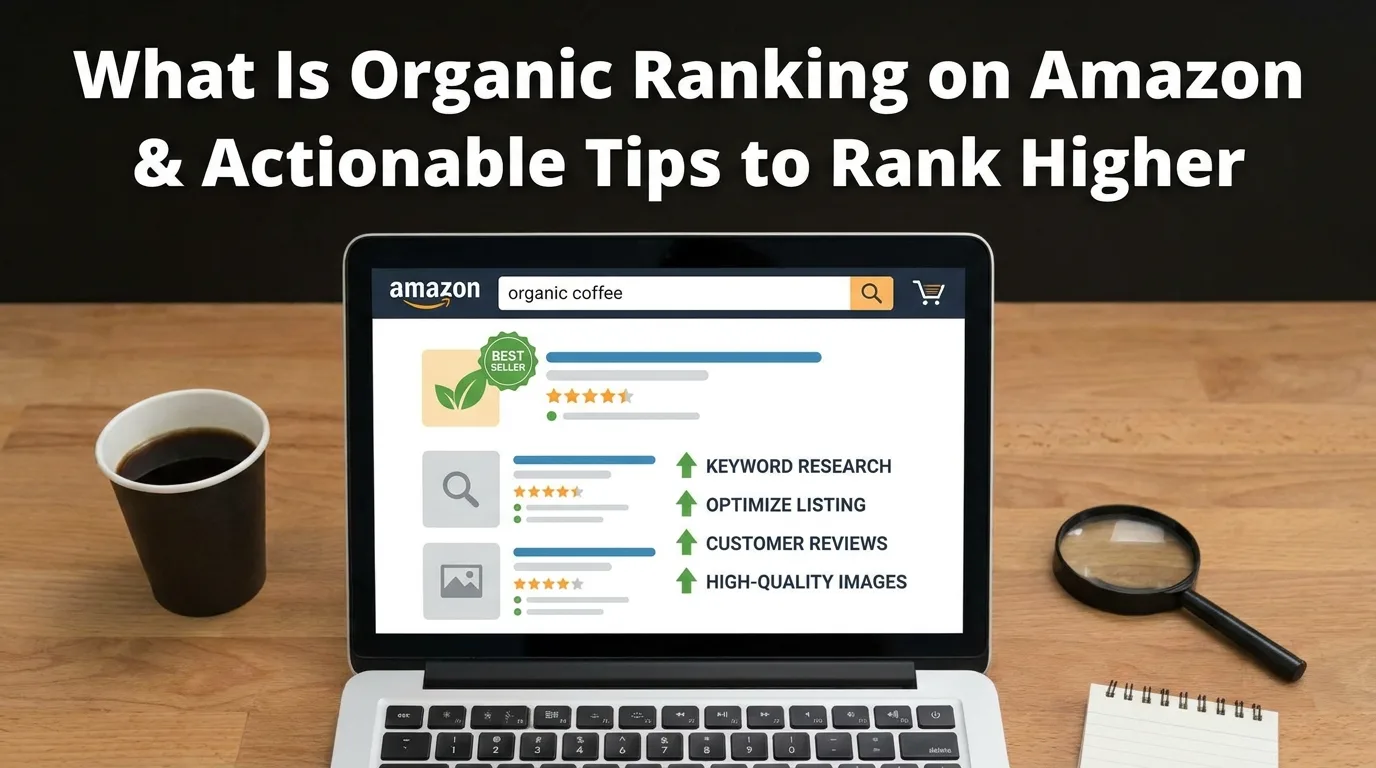
Indexing means Amazon has associated a listing with a searchable term. This usually happens when the term appears in high-value content fields or is inferable from structured attributes, backend terms, and category relevance. If an ASIN is indexed, it is eligible to appear for that query.5
Why Indexed Keywords Can Still Sit on Page 5
Eligibility does not guarantee prominence. Ranking requires competitive performance against other indexed ASINs. A product can be indexed for “stainless steel water bottle” yet remain deep in results because competing products generate stronger CTR, better conversion, more reviews, lower effective price, faster shipping, or greater recent sales velocity.24
Common Causes of Poor Ranking Despite Full Keyword Coverage
The diagnostic sequence is straightforward:
- Confirm indexing for target terms.
- Check organic position by query cluster.
- Compare CTR against category norms.
- Compare conversion rate against top competitors.
- Review price, review profile, image quality, and offer strength.
- Validate stock continuity and fulfillment speed.
If indexing is present but rank is weak, the bottleneck is usually performance, not discoverability. In that case, adding more keywords rarely solves the problem. The correct intervention is often better image packaging, stronger review acquisition, improved pricing architecture, tighter category alignment, or more stable fulfillment. That is the practical answer to how to improve organic ranking on Amazon: strengthen relevance enough to be retrieved, then outperform competitors on click, conversion, and operational trust signals.
How to Improve Organic Ranking on Amazon: A Technical Optimization Framework
Improving organic ranking on Amazon requires coordinated gains across relevance, click-through rate, conversion rate, and sales velocity. The highest-impact approach is to align keyword targeting with listing architecture, then strengthen SERP presentation, offer competitiveness, fulfillment reliability, and post-click trust signals so the product wins more clicks and purchases per impression. 124
Step 1: Map Primary, Secondary, and Long-Tail Keywords to Listing Fields
Amazon indexing and ranking begin with query-to-listing relevance. Build a keyword map before rewriting any asset. Segment terms into:
- Primary keywords: highest commercial intent, highest category relevance
- Secondary keywords: feature, use-case, material, compatibility, audience modifiers
- Long-tail keywords: lower-volume but high-conversion phrases with clearer purchase intent
Then assign them to listing fields based on indexing and shopper visibility:
| Listing Field | Primary Use | Optimization Rule |
|---|---|---|
| Title | Core relevance + top SERP visibility | Place the primary keyword early; preserve readability and category compliance |
| Bullet points | Feature-match + conversion support | Map secondary keywords to benefits, specifications, and objections |
| Description / A+ Content | Persuasion + context | Expand use cases, comparisons, and trust signals; do not rely on A+ alone for indexing |
| Backend search terms | Residual coverage | Add synonyms, alternate spellings, and missed modifiers without duplication |
| Attributes / category fields | Structured relevance | Complete size, color, material, brand, compatibility, and intended-use fields |
This is the Amazon equivalent of strengthening Organic Search Visibility and Organic Positions through better entity alignment and field-level relevance architecture.
Step 2: Rewrite the Title and Bullets for Relevance and Conversion
Keyword stuffing does not create durable ranking growth. Amazon’s ranking systems reward listings that match the query and convert after the click.24
Title architecture should follow this logic:
Brand + primary product type + core differentiator + major attribute + size/count/model
Example pattern:
Brand | Stainless Steel Water Bottle, Vacuum Insulated, Leakproof, 32 oz
Bullets should translate search intent into purchase confidence:
- Primary benefit tied to the main use case
- Technical proof such as dimensions, material, compatibility, or performance
- Differentiator versus common alternatives
- Trust reducer such as warranty, safety, or care instructions
- Edge-case use for long-tail query capture
This mirrors the logic behind CTR SEO and Organic CTR in SEO: stronger SERP appeal and better expectation matching improve downstream engagement quality.
Step 3: Upgrade Main Image, Gallery Assets, and A+ Content for Higher CTR
The main image is a query-level CTR lever. If impressions are stable but clicks lag, the hero image is often the first bottleneck.2
Prioritize:
- Main image: clean framing, maximum allowable product fill, strong contrast, no distracting composition
- Gallery sequence:
- product-only hero
- scale/context image
- feature close-up
- comparison or explainer graphic
- lifestyle use case
- dimensions / what’s included
- A/B testing priorities: hero image first, title second, bullet order third
A+ Content should reduce hesitation, not merely decorate the page. Use modular comparison charts, compatibility guidance, and objection handling to lift conversion rate after the click.1
Step 4: Strengthen Offer Competitiveness with Pricing, Coupons, and Fulfillment
Relevance gets exposure; offer quality wins transactions. Amazon evaluates whether the listing is commercially competitive and operationally reliable.13
Focus on:
- Price-position review against the top 10 organic competitors
- Coupon deployment to increase perceived value and SERP click appeal
- FBA or high-performance fulfillment to improve delivery promise and trust
- Buy Box stability to prevent ranking leakage from suppressed purchase access
A 3%–8% price disadvantage can materially depress conversion in price-sensitive categories, especially when competitors show coupons or faster delivery.23
Step 5: Build Review Velocity Ethically and Reduce Conversion Friction
Reviews influence trust, but policy-safe acquisition matters. Use compliant post-purchase follow-up, product inserts that avoid manipulation, and operational quality improvements that naturally increase positive feedback.1
Reduce conversion friction by fixing:
- weak or ambiguous sizing information
- incomplete compatibility details
- poor mobile readability
- unclear pack count or included components
- inconsistent variant naming
- unanswered pre-purchase objections
The objective is not isolated keyword insertion. It is a measurable lift in CTR × conversion rate × sales velocity, which is how to improve organic ranking on Amazon in a durable, query-specific way.24
Prioritize the three highest-impact fixes this week: title rewrite, hero image upgrade, and price-position review. Use a structured Amazon listing optimization service or implementation checklist to accelerate ranking recovery and conversion gains.
Sales Velocity, CTR, and Conversion Rate: The Feedback Loop Behind Ranking Growth
Amazon organic ranking behaves like a marketplace performance loop, not a static keyword index. Query-level visibility expands when a product earns impressions, converts those impressions into clicks, and converts those clicks into purchases at a competitive rate.24
Why Click-Through Rate Changes Exposure Potential
CTR is the first performance filter after relevance. If a listing appears for a query but underperforms on clicks, Amazon receives evidence that competing results may better satisfy shopper intent. Main image quality, title clarity, price visibility, coupon badges, review count, and star rating all influence this first-stage selection behavior.2
A higher CTR does not guarantee ranking growth by itself, but it increases traffic volume entering the next evaluation stage. This is conceptually similar to organic SERP performance in traditional search, where stronger Organic CTR in SEO can improve the effective value of existing impressions.
How Conversion Rate Reinforces Query-Level Ranking Strength
Once the shopper lands on the detail page, conversion rate determines whether the click validated Amazon’s ranking decision. Strong conversion signals usually come from:
- precise keyword-to-listing match
- persuasive bullets and image sequence
- competitive pricing
- strong reviews and low perceived risk
- fast, reliable fulfillment
If a listing consistently converts for a query like “BPA-free insulated bottle 32 oz,” Amazon has stronger evidence that the product is a relevant transactional result for that specific search intent.24
Why Sales Velocity Compounds Organic Visibility Over Time
Sales velocity is the compounding output of relevance, CTR, and conversion. Sustained unit sales can strengthen rank resilience, improve exposure breadth across adjacent long-tail queries, and support higher placement for commercially important terms.2
This is the bridge between classic SEO and marketplace economics: traditional search often optimizes for information retrieval quality, while Amazon optimizes for purchase probability and customer satisfaction. Better Organic Search Visibility on Amazon therefore depends on commercial performance, not just lexical optimization.
Advanced Ranking Levers Most Sellers Underuse
Attribute Completeness, Structured Data, and Catalog Hygiene
Many ranking plateaus are catalog-quality problems disguised as SEO problems. Amazon relies on structured product data to classify, retrieve, and compare listings.15 Incomplete or misaligned attributes weaken machine-readable relevance even when the visible copy looks optimized.
Critical controls include:
- exact category placement
- normalized size, color, material, and compatibility fields
- complete intended-use and target-audience attributes
- suppression prevention for missing compliance or image requirements
- elimination of duplicate or conflicting catalog data
This is the marketplace analogue of structured data integrity in search systems: better catalog hygiene improves retrieval confidence and ranking resilience.
Variant Strategy, Review Consolidation, and Parent-Child Architecture
Parent-child variation design affects both UX and performance concentration. When variants are logically grouped, review equity and shopper choice can consolidate on a stronger parent experience. When variants are fragmented or incorrectly merged, relevance and conversion can degrade.
Best practice:
- group true variants only: size, color, count, scent, style
- avoid combining materially different products under one parent
- preserve review coherence and selection clarity
- ensure variant naming is unambiguous on mobile
Done correctly, variation architecture can improve conversion efficiency and reduce decision friction without diluting query relevance.15
Inventory Stability, Buy Box Ownership, and Fulfillment Reliability
Stockouts, Buy Box loss, and unstable fulfillment frequently erase ranking gains faster than poor copy. A listing that cannot reliably transact becomes less useful to Amazon’s ranking system.3
“Sellers often think ranking is lost because of keywords, when the real cause is operational instability. If inventory goes out of stock or Buy Box ownership becomes inconsistent, the algorithm loses confidence in the offer’s ability to satisfy demand at scale.” — Senior Marketplace Operations Consultant
Operational ranking controls include:
- maintain in-stock rates for top queries and top variants
- forecast inventory around promotions and seasonality
- protect Buy Box consistency through pricing discipline and seller metrics
- use reliable fulfillment to preserve delivery promise and customer satisfaction
For sellers asking what is organic ranking on Amazon in practical terms, the answer is not just unpaid placement. It is unpaid placement continuously earned through relevance, offer quality, and operational reliability.123
Measurement, Experimentation, and Ranking Diagnostics
What to Track: Organic Position, Impression Share, CTR, CVR, and Session Data
Organic ranking on Amazon should be measured at the query level, not only at the ASIN level. A reliable diagnostic framework tracks keyword-specific organic position, impression share where available through retail media or category proxies, click-through rate, conversion rate, sessions, unit session percentage, price changes, review velocity, rating shifts, and inventory events.23 This is the operational layer behind what is organic ranking on amazon and the practical baseline for how to improve organic ranking on amazon.
Separate metrics into visibility, engagement, conversion, and operational health:
| Metric Layer | Primary Metrics | Diagnostic Use |
|---|---|---|
| Visibility | Organic position, indexed keyword count, category placement, impression trend | Detects discoverability gains or losses |
| Engagement | CTR, main image performance, title relevance | Identifies click inefficiency despite ranking |
| Conversion | CVR, unit session percentage, order rate, revenue per session | Confirms whether traffic converts into sales signals |
| Commercial | Price index, coupon status, Buy Box status, review count, star rating | Explains conversion compression or lift |
| Operational | In-stock rate, fulfillment speed, return rate, suppression events | Surfaces rank loss caused by offer instability |
For search-performance interpretation, align Amazon CTR and conversion diagnostics with broader search concepts such as CTR SEO, Organic CTR in SEO, Organic Search Visibility, and Organic Positions. The distinction matters: rank movement without CTR improvement often signals weak creative relevance, while session growth without CVR support rarely sustains ranking.4
How to Run Controlled Listing Tests Without Misreading Results
Controlled Amazon listing tests require one-variable changes, fixed observation windows, and event logging. Change only one major element at a time: title, main image, A+ content, price, coupon, or bullet structure. Record pre-test baselines for rank, sessions, CTR, CVR, units, and Buy Box ownership. Avoid overlapping tests with promotions, stock interruptions, review spikes, or external traffic bursts, because these confound attribution.2
Use matched query cohorts: primary transactional terms, secondary descriptive terms, and branded queries. Rank gains on branded searches alone do not prove broader organic recovery. Compare against category demand trends to avoid mistaking seasonal lift for relevance improvement.
Leading vs Lagging Indicators for Ranking Recovery
Leading indicators include improved indexing coverage, higher CTR, stronger add-to-cart rate, and rising unit session percentage. Lagging indicators include average organic position improvement, category rank recovery, and sustained sales velocity.24 Amazon’s ranking system responds to purchase probability and shopper satisfaction, so conversion improvements may appear before durable rank gains.
If CTR rises but CVR falls, the listing may be attracting the wrong search intent. If CVR improves but rank remains flat, the product may still lack sufficient traffic, keyword breadth, or sales velocity. Diagnose ranking recovery only after separating true relevance gains from demand shifts, price shocks, and inventory disruptions.3
Common Mistakes That Suppress Organic Ranking
Keyword Stuffing, Redundant Copy, and Weak Relevance Mapping
Over-optimization remains a common ranking suppressor. Repeating the same terms across title, bullets, description, and backend fields does not strengthen relevance indefinitely; it often reduces readability, weakens attribute coverage, and misaligns the listing with actual shopper intent.5 Corrective action: map one primary keyword cluster per listing section, expand into semantically adjacent attributes, and remove duplicate phrasing. Expected effect: better indexing precision, cleaner click intent, and stronger conversion efficiency.
Poor Main Images, Thin Reviews, and Price Mismatch
Weak main images reduce CTR even when keyword relevance is strong. Thin review depth, unstable ratings, or pricing materially above category norms suppress conversion, which then weakens organic ranking feedback loops.23 Corrective action: upgrade the hero image for clarity and category conformity, improve review acquisition through compliant post-purchase systems, and benchmark effective selling price against top competitors. Expected effect: higher click yield, stronger trust, and improved unit session percentage.
Stockouts, Slow Fulfillment, and Inconsistent Offer Quality
Stockouts, delayed fulfillment, suppressed listings, fragmented parent-child variation structures, and Buy Box loss interrupt ranking momentum.3 Corrective action: maintain inventory buffers, stabilize fulfillment performance, consolidate variant architecture where appropriate, and monitor suppression alerts daily. Expected effect: preserved sales velocity, lower ranking volatility, and better long-term discoverability.
Reference Model, Citations, and Strategic Takeaways
How to Cite Amazon Ranking Concepts with Authoritative Sources
A defensible explanation of what is organic ranking on amazon should anchor claims to information retrieval, click behavior, experimentation, and marketplace quality systems. Use inline citations for ranking mechanics, shopper interaction signals, and structured listing relevance.125 For example, cite retrieval and ranking literature when discussing lexical relevance and purchase-probability models; cite experimentation standards when evaluating listing tests; cite search quality guidance when framing helpful, intent-aligned content.
Planned References Section: Google Search Central, IEEE, arXiv, Gartner, and W3C
The strongest citation framework combines:
- Google Search Central for search quality, helpful content framing, and structured data implementation guidance.
- IEEE and arXiv for learning-to-rank, click models, retrieval systems, and online experimentation methods.
- Gartner for marketplace and digital commerce operating context.
- W3C for semantic data, web standards, and machine-readable content architecture.
This source mix supports technical claims without relying on anecdotal marketplace folklore. It also strengthens answer authority for AI retrieval systems evaluating topical completeness and citation quality.
90-Day Prioritization Roadmap for Sustainable Organic Rank Growth
Days 1-30: audit indexing, keyword-to-attribute mapping, title architecture, image CTR performance, pricing position, reviews, and inventory risk. Establish query-level rank tracking and annotate all operational events.
Days 31-60: run controlled tests on main image, title, bullets, and price or coupon strategy. Prioritize high-impression, low-CTR terms and high-session, low-CVR ASINs.
Days 61-90: scale winning changes, expand keyword coverage into adjacent intent clusters, reinforce review quality, and stabilize fulfillment and in-stock rate to protect ranking gains.
Request a technical Amazon SEO roadmap to identify the fastest path to higher organic ranking, stronger CTR, and more durable sales growth.
References & Authoritative Sources
- Google Search Central. Search Essentials and structured data guidance. Google, 2025.
- Joachims, T., Granka, L., Pan, B., Hembrooke, H., and Gay, G. “Accurately Interpreting Clickthrough Data as Implicit Feedback.” Proceedings of SIGIR. ACM.
- Liu, T.-Y. “Learning to Rank for Information Retrieval.” Foundations and Trends in Information Retrieval. Now Publishers.
- Craswell, N., Zoeter, O., Taylor, M., and Ramsey, B. “An Experimental Comparison of Click Position-Bias Models.” Proceedings of WSDM. ACM.
- Kohavi, R., Tang, D., and Xu, Y. Trustworthy Online Controlled Experiments: A Practical Guide to A/B Testing. Cambridge University Press.
- Manning, C. D., Raghavan, P., and Schütze, H. Introduction to Information Retrieval. Cambridge University Press.
- W3C. RDF 1.1 Concepts and Abstract Syntax and related semantic web standards. World Wide Web Consortium.
- arXiv papers on neural retrieval, ranking systems, and e-commerce search evaluation relevant to marketplace ranking diagnostics.
- Gartner research on digital commerce platforms, marketplace competition, and retail search performance trends.
Footnotes
-
Amazon Seller Central documentation and marketplace best practices on listing relevance, detail page completeness, and offer quality. ↩ ↩2 ↩3 ↩4 ↩5 ↩6 ↩7 ↩8 ↩9 ↩10 ↩11 ↩12 ↩13 ↩14
-
Industry consensus on Amazon search ranking factors, including relevance, CTR, conversion rate, and sales velocity, as reflected in leading marketplace analytics platforms and retail search research. ↩ ↩2 ↩3 ↩4 ↩5 ↩6 ↩7 ↩8 ↩9 ↩10 ↩11 ↩12 ↩13 ↩14 ↩15 ↩16 ↩17 ↩18 ↩19 ↩20 ↩21
-
Amazon customer experience and fulfillment standards influencing delivery reliability, stock health, and post-purchase satisfaction. ↩ ↩2 ↩3 ↩4 ↩5 ↩6 ↩7 ↩8 ↩9 ↩10
-
Commerce search optimization principles showing that transactional ranking systems prioritize purchase probability and shopper satisfaction over pure lexical similarity. ↩ ↩2 ↩3 ↩4 ↩5 ↩6 ↩7 ↩8 ↩9 ↩10 ↩11
-
Amazon listing architecture principles covering titles, bullets, backend search terms, attributes, and category taxonomy for indexing and retrieval. ↩ ↩2 ↩3 ↩4 ↩5 ↩6 ↩7
Frequently Asked Questions & Citations
Organic ranking on Amazon is the unpaid placement of a product listing in Amazon search results for a given query. Amazon evaluates both keyword relevance and commercial performance signals such as click-through rate, conversion rate, reviews, pricing competitiveness, fulfillment reliability, and sales velocity.
Amazon first determines whether an ASIN is indexed and relevant for the shopper’s query using title terms, bullet points, backend search terms, attributes, and category mapping. It then ranks eligible products based on predicted purchase likelihood, using engagement, conversion efficiency, inventory stability, and customer experience signals.
Improve ranking by strengthening keyword coverage in titles, bullets, and backend terms while also increasing conversion rate through better images, pricing, reviews, and A+ content. Operational factors matter too: maintain in-stock status, fast fulfillment, competitive offers, and steady sales velocity to avoid ranking declines.
Yes, CTR is a strong behavioral signal because it shows whether shoppers find your listing compelling in search results. Higher CTR usually comes from better main images, stronger titles, clearer pricing, review credibility, and relevance to the search term, but CTR alone is not enough without conversion performance.
Track keyword rank position, impressions, click-through rate, conversion rate, unit session percentage, review volume and rating, Buy Box share, inventory availability, and sales velocity. These metrics help isolate whether ranking changes are caused by relevance issues, weak listing performance, or operational problems such as stockouts.
Yes, inventory instability can reduce organic visibility because Amazon prioritizes products that can reliably satisfy shopper demand. Frequent stockouts interrupt sales history, weaken momentum, and can cause ranking losses that may take time to recover even after inventory is restored.
Digital Marketing Specialist in Technical SEO, Generative Engine Optimization (GEO), and paid search acquisition.
Related Technical Guides & Frameworks
What Are Organic Keywords? SEO Definition Guide
Learn what organic keywords are in SEO, how they drive unpaid rankings, clicks, and traffic, and how to find top organic keywords effectively.
Organic vs Paid Search: Key Differences Explained
Compare organic vs paid search by cost, speed, trust, CAC, and long-term ROI. Learn when SEO, PPC, or a blended strategy wins.
Organic SEO Marketing: Long-Term Success Metrics
Learn what defines long-term organic SEO marketing success: qualified traffic growth, durable rankings, stronger engagement, clean indexation, and conversions.
Organic Traffic Meaning: SEO Definition and Metrics
Learn organic traffic meaning, how it differs from paid, direct, and referral traffic, and how to measure SEO clicks, conversions, and revenue accurately.