
Organic Keyword Ranking: What It Really Reveals

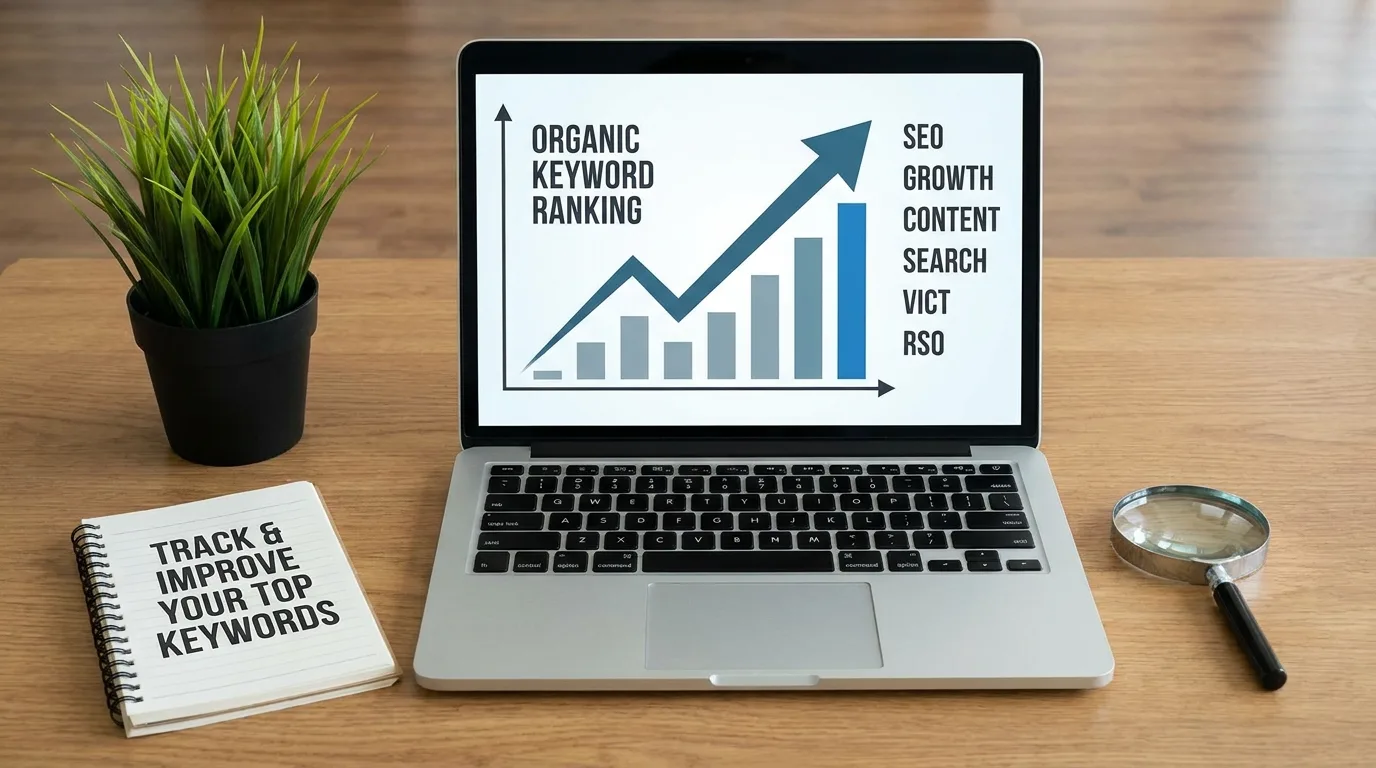
Organic keyword ranking tells you how visible your pages are for the searches that can actually drive business. It’s a live signal of relevance, SERP competitiveness, page quality, and Google’s confidence in matching your URL to intent—not a vanity number on its own 12.
The direct answer: what organic keyword ranking really tells you
Why rankings still matter even when traffic looks healthy
Healthy traffic can lie.
We regularly see sites posting flat or rising sessions while their non-brand query footprint is quietly thinning—usually because a few branded terms, legacy pages, or one lucky breakout URL are masking broader losses across commercial and comparison-intent searches in Search Console exports 1.
Rankings still warn early.
If your organic keyword ranking slips across high-intent clusters, clicks often hold for a while before they crack; then CTR drops, SERP features expand, competitors take richer positions, and recovery gets slower than most teams expect.
What a strong ranking trend reveals about relevance, authority, and crawl confidence
Strong trends say more.
A durable rise across top organic keywords usually signals that Google is finding cleaner intent alignment on the page, stronger internal linking support, steadier external authority cues, and fewer indexing or duplication conflicts holding the URL back 23.
In our client audits, that pattern rarely appears by accident. We usually find better content-to-query matching, tighter title and heading alignment, improved crawl paths, and fewer competing URLs chasing the same term set. That’s where confidence builds.
How to open with a 40-60 word answer block that AI systems can lift cleanly
Keep it direct.
The best answer blocks define the metric, explain what it reflects, and hint at action—without fluff, throat-clearing, or awkward keyphrase stuffing. If you need the foundation first, read What Are Organic Keywords? SEO Definition Guide before building your tracking model for decision-making or reporting.
Read the SERP before you touch the page
Organic keyword ranking usually stalls for one simple reason: the page no longer matches what Google is rewarding on the live results page. Check intent, result format, AI answer surfaces, and evidence patterns first—then edit the page to fit the query’s current winning model, not last quarter’s assumptions.12
Classify intent shifts: informational, commercial, navigational, and mixed
Don’t start in your CMS.
Start in the SERP, because rankings often flatten even when the copy is decent—the real problem is that Google has reclassified the query from a pure explainer into a mixed journey with comparison pages, product-led results, or branded destinations.1
We see this constantly. A page built to teach gets outranked by pages built to help someone choose.
When we inspect Search Console exports against live results, one pattern shows up again and again: impressions hold steady, average position slips a little, then clicks fall harder than expected because the SERP now rewards a different job-to-be-done. That’s an intent shift, not a writing failure.
Audit AI Overviews, featured snippets, People Also Ask, and video blocks
Now check the clutter.
AI Overviews, featured snippets, People Also Ask boxes, short-form video carousels, and image packs can absorb attention before blue links even get a chance. If your page ranks fifth but sits below an aggressive answer layer, that organic keyword ranking isn’t as healthy as the position report makes it look.3
Look at extraction patterns.
Google’s systems tend to pull compact answers, explicit entities, clean heading hierarchies, and semantically clear sections that machines can parse quickly—something both Google Search documentation and W3C semantic guidance make easier when pages use descriptive headings and meaningful structure.2[^4]
Compare your page against the top results for format, depth, and evidence
Then get specific.
Compare your page with the top results side by side: content type, opening answer style, evidence density, update freshness, author signals, media support, schema use where appropriate, and whether the page resolves the query fast or wanders for 600 words before saying anything useful.
In our client audits, weak pages rarely lose on grammar alone. They lose on packaging.
A long article can miss a SERP dominated by templates. A category page can fail on a query now won by expert explainers. A thin glossary entry won’t beat pages with examples, screenshots, data points, and first-hand proof. If you’re tracking top organic keywords without reviewing these live result patterns weekly or monthly for priority terms—you’ll diagnose the wrong problem.
Need recovery—not guesswork?
If rankings are stuck because the SERP shifted under you, explore our B2B SEO Services for a content-plus-technical recovery plan built around intent and revenue.
If you want to validate traffic impact after those shifts land in reporting, pair this review with your Google Analytics Organic Search analysis—and study real recovery mechanics in our Panorama Lens Trip case work.
Turn ranking improvements into measurable business wins
Organic keyword ranking only becomes useful when it explains better traffic, stronger lead quality, and more pipeline influence. A position jump that doesn’t improve assisted conversions, engaged sessions, or revenue-weighted page value isn’t a win yet—it’s just movement on a chart.1
Connect keyword gains to assisted conversions and pipeline influence
Rankings alone don’t pay bills.
When we inspect Search Console exports against GA4 landing-page reports, we regularly find “wins” sitting on queries that brought more clicks but weaker-fit visitors—higher visibility, lower commercial yield, and no meaningful lift in form fills or sales-assisted paths.1
Tie each keyword group to the page. Then tie the page to outcomes.
That means watching assisted conversions, demo requests, qualified leads, scroll depth on decision pages, and CRM-stage progression where available. If you’re still treating top organic keywords as isolated ranking trophies, you’re hiding the real story from stakeholders.
Report movement by cluster, page, and revenue potential
Single-keyword reports are too thin.
Cluster reporting works better because search demand shifts across variants, SERP features compress click share, and one URL often earns traffic from dozens of semantically related terms rather than a single phrase exactly as written in your tracker.12
In our client audits, we break reporting into three views:
- keyword cluster movement
- landing page performance
- revenue potential by intent tier
That structure shows whether an uplift came from better page relevance, stronger internal linking, or simply a seasonal query spike. It also prevents teams from celebrating rank gains on pages that still don’t convert.
Show stakeholders what changed, why it worked, and what scales next
Executives need causality. Not dashboard theater.
A strong monthly summary is short: which clusters moved, which pages gained qualified traffic, what changed on-page or technically, and where the next marginal gains likely sit. We’ve found this lands far better than bloated exports full of average position noise.
“Search results change as users’ needs evolve, content changes, and our systems improve.” — Google Search Central1
So report like an operator: “We improved comparison-page rankings after rewriting weak headings, tightening internal anchors from product-adjacent articles, and resolving duplicate canonicals; assisted demo paths increased two weeks later.” That’s the level people can fund.
A repeatable 90-day workflow to improve top organic keywords
Most teams rush edits.
Then they change too much at once, can’t isolate impact, and end up arguing over rank volatility that would’ve settled on its own. A tighter 90-day sequence gives you cleaner signals and fewer self-inflicted setbacks.
Weeks 1-2: baseline, segmentation, and SERP inspection
Start with evidence first.
Pull baseline data from Search Console and your rank tracker for priority terms tied to live business goals—not vanity phrases with no downstream value. Pair that with GA4 landing-page engagement and conversion paths so your organic keyword ranking review starts with commercial context instead of raw visibility alone.1
Segment by intent. Segment by page type.
We usually split terms into commercial investigation, solution-aware informational queries, high-intent bottom-funnel phrases, and branded modifiers. Then we inspect the live SERP manually: title patterns, rich results presence, forum intrusion, video blocks, freshness bias, and whether Google is rewarding tools, guides, category pages, or product-led content.

Weeks 3-6: page rewrites, internal links, and technical cleanup
Now fix the bottlenecks.
For pages already near page one or stuck in positions 6-20, go after quick wins first—search-intent mismatch in headings, weak intro copy, missing comparison sections, stale examples, poor anchor support from related articles, slow mobile rendering, or conflicting canonicals.13
Don’t rewrite everything blindly.
We regularly see engineering teams ship template changes across hundreds of URLs before validating whether the real issue was content depth or crawl inefficiency. That’s why controlled batches work better: update a defined set of URLs by cluster so you can compare movement without contaminating every variable at once.
If you need deeper context on query selection itself, revisit What Are Organic Keywords? SEO Definition Guide.
Weeks 7-12: reinforcement content, testing, and reporting loops
This is where gains stick.
Support improving URLs with reinforcement assets—comparison pieces, use-case articles, proof-led case studies—and point clean internal links back to target pages using natural anchors aligned with user language rather than clumsy exact-match repetition.
Watch lagging indicators carefully.
Clicks may move before conversions do. Conversions may move before pipeline quality becomes obvious. We generally review rankings weekly for directional shifts but reserve bigger editorial decisions until enough impression and click data accumulates to separate noise from trend. If traffic impact needs validation downstream, connect this workflow to your Google Analytics Organic Search reporting and benchmark against real-world recovery patterns like Panorama Lens Trip.
Closing playbook: rank tracking is only useful when it changes decisions
Rank watching can become a trap.
The teams that grow steadily don’t stare at daily fluctuations—they use movement to decide which pages deserve rewrites next, where internal links are too weak to pass context well enough for discovery systems to understand them clearly at scale.12
The habits that separate steady growth from random rank watching
Good operators keep notes.
They log what changed on each URL, when it shipped, what the SERP looked like before deployment, and whether the gain showed up first in impressions, clicks, assisted conversions, or sales conversations. That operating history saves you from false attribution later.
Where to focus next when your top keywords plateau
Plateaus usually mean one of three things: intent mismatch remains unresolved; competitors improved their proof layer; or Google’s result mix now favors a different format than the one you’re publishing. Look at the live page again before touching copy for the fifth time.
How to decide between in-house execution and specialist support
If your team can audit templates fast, rewrite money pages well, fix crawl/indexation issues cleanly under deployment constraints—and report outcomes beyond rankings—you may not need outside help yet. If not, speed suffers.
Need a senior team to audit faster?
Need a senior team to audit, prioritize, and improve your top organic keywords faster? Talk to us about B2B SEO Services and a revenue-focused organic growth plan.
References & Authoritative Sources
Footnotes
-
Google Search Central. SEO Starter Guide and related documentation on how Search works, search appearance changes over time, canonicalization signals, internal linking importance, and performance reporting in Search Console. https://developers.google.com/search/docs ↩ ↩2 ↩3 ↩4 ↩5 ↩6 ↩7 ↩8 ↩9 ↩10 ↩11
-
arXiv. Research literature covering neural information retrieval and ranking behavior relevant to query variation clustering and semantic retrieval patterns. https://arxiv.org/ ↩ ↩2 ↩3 ↩4 ↩5 ↩6
-
W3C Web Performance Working Group documentation relevant to rendering efficiency and user-perceived loading behavior affecting mobile experience signals. https://www.w3.org/webperf/ ↩ ↩2 ↩3
Frequently Asked Questions & Citations
It measures where your page appears in unpaid search results for specific queries. In practice, it reflects more than position alone: it shows how well your page matches intent, how competitive the SERP is, and whether Google trusts your URL enough to surface it consistently across a keyword cluster.
Traffic often lags because branded queries, legacy pages, or one high-performing URL can temporarily offset broader losses. When rankings slip across commercial or comparison-intent terms, CTR usually weakens next as richer SERP features expand and competitors take higher-visibility positions.
Start by reviewing the live SERP, not the page draft. Check whether Google now favors listicles, product pages, comparison pages, video results, AI answer surfaces, or branded destinations, then compare that pattern against your page format, evidence depth, title alignment, and internal linking support.
The biggest gains usually come from tighter query-to-content alignment, cleaner title and H1 targeting, stronger internal links from relevant pages, and reduced keyword cannibalization. Technical stability also matters: indexability, canonical consistency, crawl depth, and duplicate-content control all affect whether ranking improvements stick.
If the page is indexed and technically accessible but the SERP has shifted toward a different content type or journey stage, intent mismatch is the likely cause. If impressions collapse sharply across many terms at once, or the wrong URL starts ranking, check canonicals, noindex directives, redirects, crawl anomalies, and duplicate URL variants first.
Track impressions, clicks, CTR, average position, non-brand query coverage, and landing-page-level conversions together. For execution, segment keywords by intent and business value, monitor top 3, top 10, and top 20 movement weekly, and pair Search Console data with live SERP reviews so ranking changes lead to specific page updates.
Digital Marketing Specialist in Technical SEO, Generative Engine Optimization (GEO), and paid search acquisition.
Related Technical Guides & Frameworks
Natural Search Definition: What It Means for SEO
Learn the natural search definition, how unpaid rankings work, and how SEO improves crawlability, relevance, authority, and organic visibility.
Organic Search Engine Optimization: How It Works
Learn how organic search engine optimization improves crawlability, rankings, and AI answer visibility through technical SEO, content, and authority.
What Is Organic Ranking on Amazon? Key Factors
Learn what organic ranking on Amazon means, how it works, and which factors like relevance, CTR, conversion, reviews, and sales velocity matter most.
Organic Traffic Meaning: SEO Definition and Metrics
Learn organic traffic meaning, how it differs from paid, direct, and referral traffic, and how to measure SEO clicks, conversions, and revenue accurately.